“Humanity is at a crossroads as we all confront extreme weather events and the slow onset of climate change. There is an urgent need to transition toward agroecology and regenerative agriculture, as ecological systems approach critical tipping points. Despite agroecology providing evidence-based data that it can not only help cool the planet by reducing emissions and capturing carbon but also contribute to communities becoming resilient, much of the funding in agriculture is still directed towards corporate and profit-driven agriculture.”
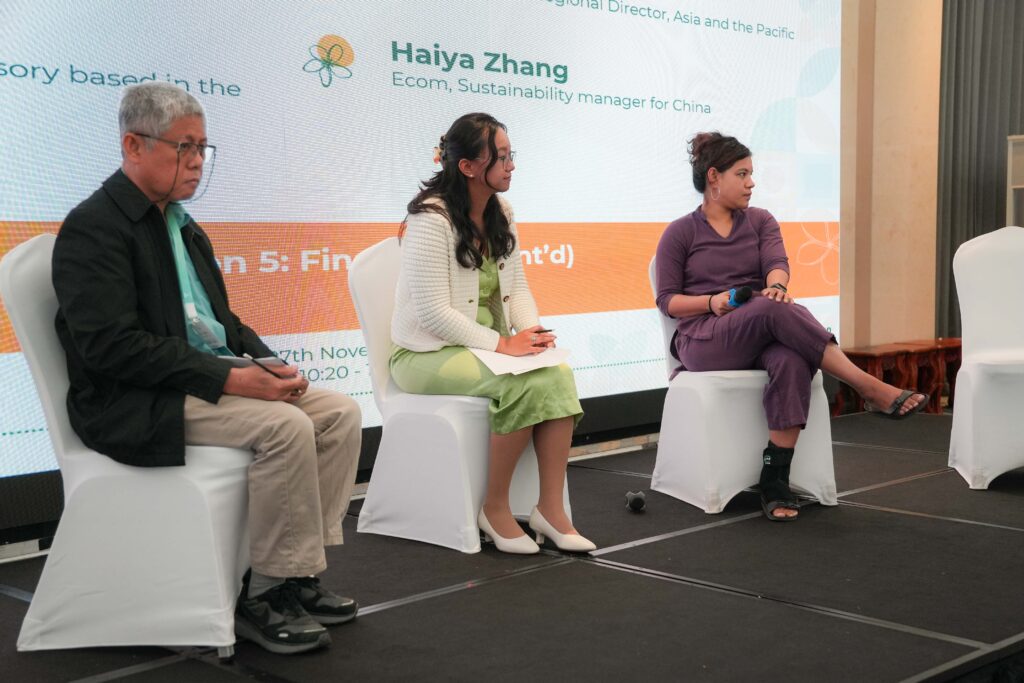
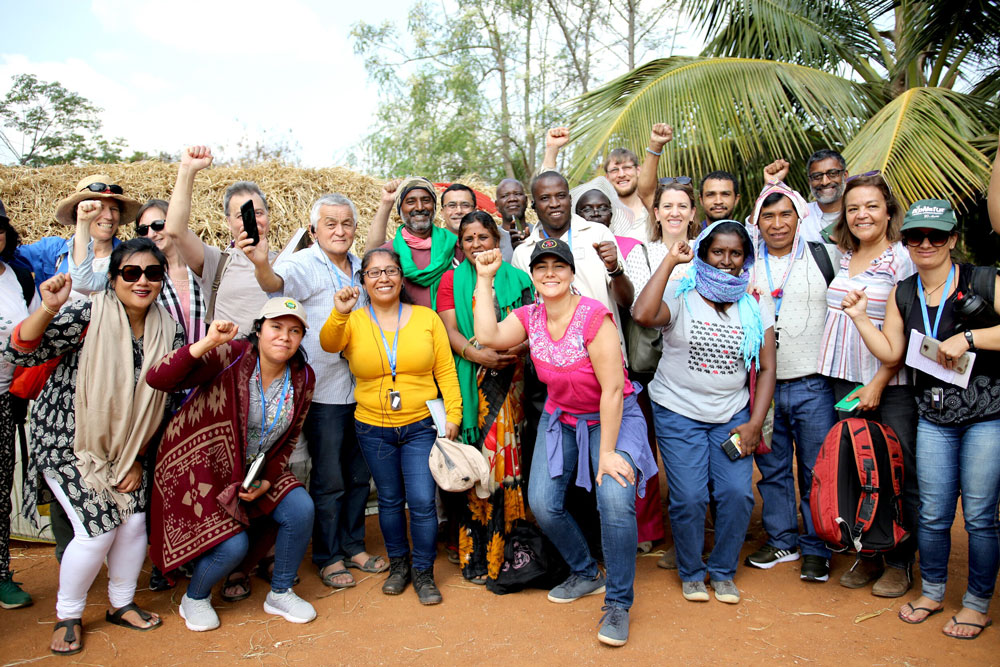
This was my intervention as one of the panelists in the discussion on Financing Agroecology in the Transitioning Towards Agroecology and Regenerative Agriculture (TARASA) Conference, held in Vientiane, Lao PDR, from November 23-29, 2025, where I was representing the Agroecology Fund (AEF).
While most of the speakers offered profound and contextual presentations about their experiences in agroecology, what remained most vivid in my mind were the presentations of youth agroecology practitioners. Rather than pursuing careers in urban centers, they returned to their family farms to create livelihoods in their communities through agroecology. What they have undertaken is proof that agroecology has the potential to reverse the global trend of rural-to-urban migration and address the challenge of aging farming population, both consequences of the limitations of conventional agricultural models.
Advancing the ASEAN Guidelines for Agroecology Transition
A major highlight of the conference was the discussion on the Association of Southeast Asian Nations (ASEAN) Guidelines for Agroecology Transition. These guidelines represent an important regional effort by the ASEAN to support its member states in transforming food systems toward sustainability, resilience and equity.
The framework emphasizes 7 key transition leverage points:
First, enabling policy and governance. Governments are encouraged to create coherent national strategies that support agroecological transition through legislation, incentives and institutional coordination.
Second, farmer-centered knowledge systems. Agroecology recognizes farmers not just as recipients, but as innovators and co-creators of technologies and solutions where traditional knowledge, participatory research and community-led experimentation play a central role.
Third, capacity building and knowledge sharing. This included establishing platforms such as digital media hub to exchange best practices and lessons learned.
Fourth, research and innovation. Developing systemic research agendas canstrengthen the scientific credibility and visibility of local agroecological practices.
Fifth, multi-stakeholder engagement. This involves fostering collaboration among governments, civil society groups and private sector.
Sixth, creating sustainable value chains. Intervening across the value chain can promote safe, diverse and nutritious food while ensuring fair returns for products.
Seventh, financing solutions. This includes designing financial instruments and risk-mitigation strategies tailored tofarmers transitioning toward agroecological systems.
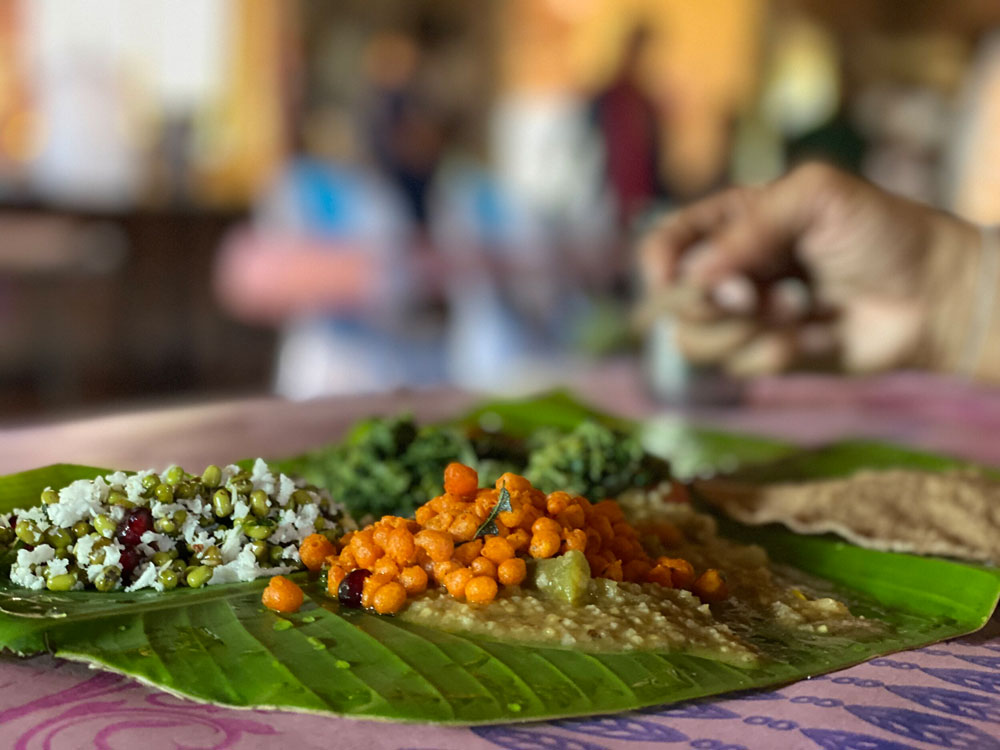
Equally valuable were the conversations outside the formal sessions, over Lao coffee, shared meals featuring a fusion of Eastern and Western cuisines, and evening walks along the Mekong night market. These moments reinforced the sense of regional solidarity. Agroecology is not simply a technical shift in farming practices; it is a social movement grounded in culture, cooperation and shared responsibility.
It is incumbent upon us at the AEF to study the guidelines and identify areas of alignment with our own work. As we deepen our engagement, this should include our partner grantees in the region in the implementation, future development and evolution of these guidelines for Agroecology transition. This is particularly relevant and timely as AEF prepares for its Strategic Planning process in Mexico.
AEF supports the conclusions that emerged from this conference.
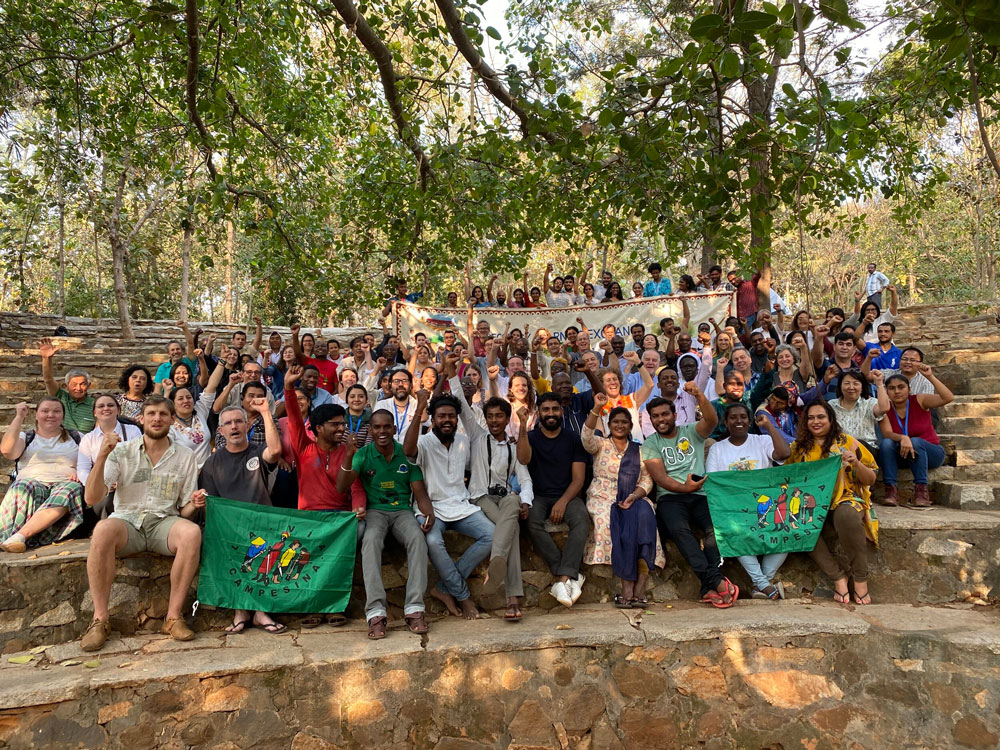
TARASA25 was a regional, multi-stakeholder conference held in Vientiane, Lao PDR, from 25–27 November 2025 that convened researchers, farmers, policymakers, youth leaders, civil society, and private-sector actors from across Asia-Pacific to advance agroecology and regenerative agriculture through knowledge exchange, policy dialogue, financing discussions, and collaboration, strengthening collective action toward resilient, equitable, and sustainable food systems, with support from governments and partners including the Food and Agriculture Organization of the United Nations.
Cristino C. Panerio is advisor to the Agroecology Fund, an Agricultural Engineer, Chairman of the Board of MASAI Inc. in the Philippines, and long-time advocate of people-led development and agroecology through his work with MASIPAG’s Asian Peoples’ Exchange Program (APEX) in partnership with PANAP and Misereor.
Inside the First International Convening on Participatory Action Research for Climate Advocacy (IPA-Global)
“Colho um sol que arde no chão, lavro a luz dentro da cana, minha alma no seu pendão. Madrugada camponesa, faz escuro (já nem tanto), vale a pena trabalhar. Faz escuro mas eu canto porque a manhã vai chegar” Madrugada camponesa – Thiago de Mello. (Extract of a poem recited by Antonia Borges da Silva, MST, Brazil)
(Madrugada camponesa reflects the quiet strength and dignity of rural life at dawn, capturing the profound connection between farmers and the land as a symbol of resistance.)
What if local communities and Indigenous Peoples were the researchers, rather than being the subjects of study? And what if policymakers finally see agroecology as one of the key solutions to climate change?
These questions became a shared possibility at the first International Convening on Participatory Action Research for Agroecology and Climate Advocacy, gathering 41 collaboratives from the 43 grantees and partners that are part of the Agroecology Fund’s IPA-Global Initiative—IPA standing for Investigación Participativa en Agroecología or Participatory Research on Agroecology.
From November 17 to 21, collaboratives from grassroots organizations representing national networks, platforms, NGOs, farmers, Indigenous peoples, and fisheries organizations from 16 countries gathered inGuararema, São Paulo, Brazil. They came to exchange experiences and examine how Participatory Action Research (PAR) strengthens advocacy for agroecology and climate justice.
The convening took place amid an intense moment of social mobilization in Brazil. Many participants arrived directly from a hopeful gathering of civil society activists, Cúpula dos Povos (People’s Summit) in Belém, and from the once again more exclusive COP30 official proceedings, where deep divisions between the blue and green zones highlighted the persistent exclusion of grassroots voices from the high-level decision-making on climate solutions.
Participatory Action Research: A Pathway to Community Land Governance
To elevate community knowledge and leadership in agroecology-based climate solutions, the Agroecology Fund (AEF) launched the IPA-Global Initiative, supported by the Waverley Street Foundation. Today, IPA-Global includes grantee partners working across Africa, Asia, the Americas, and the European Union, representing diverse food producers, ecosystems, and political contexts.
IPA-Global builds on the lessons learned from the IPA-LAC initiative, AEF’s first effort to provide substantial support to Participatory Action Research (PAR) processes. IPA-LAC ran from 2023 to 2025 and involved seven collaboratives from Latin America with financial support from the International Development Research Centre (IDRC).
PAR is an approach that emerges from the legacy of many engaged researchers and thinkers, such as the Colombian sociologist Orlando Fals Borda, who believed that people must become researchers of their own realities to transform them, and the Brazilian educator Paulo Freire, whose Pedagogy of the Oppressed forms the critical and pedagogical soul of PAR. In addition, numerous community-based, Indigenous, and feminist approaches around the world have long practiced and shaped the principles we now associate with PAR. Since 2023, the Agroecology Fund has supported partners in adopting and developing this approach to strengthen both research and advocacy.
▶ Meet some of the IPA-Global initiatives:
DAY 1 — Understanding the Political Moment for Small Farmers in Brazil
The convening opened with remarks from Daniel Moss and Angela Cordeiro, Co-Directors of the Agroecology Fund, and John Wilson, Advisory Board Member. They emphasized how PAR is a useful tool for communities to ask their own questions—those that matter for their livelihoods, territories, and families. This principle of co-creation is fundamental to agroecology (one of 13 guiding principles) and one of the main differences between this approach and the Green Revolution, which focuses solely on technology transfer to communities.
João Pedro Stedile, a member of the National Directorate of the Landless Rural Workers Movement [Movimento dos Trabalhadores Rurais Sem Terra] (MST), was the first panelist to present (via a pre-taped video) a detailed timeline of Brazil’s long struggle for agrarian reform and for a fair food economy rooted in family farming.
“We cannot remain with our arms crossed, waiting for governments to act… We are fighting against land concentration and agribusiness to establish family farming. But we must change the paradigm toward food systems that protect water, sovereignty, and biodiversity,” says Stedile.
The MST is a social movement that seeks a just and inclusive land reform. This movement has been a powerful voice in civil society, driving Brazil’s commitment to agroecology forward and connecting it to the pathway to confront the climate crisis.
Antonia Borges da Silva, a member of Via Campesina Brasil and the MST, emphasized the importance of knowledge co-creation and training in accelerating the agroecological transition. During her intervention, Antonia also mentioned the main areas where MST is focusing its work: adopting small-scale equipment to ease the workload—particularly for young people and women—and improve labor productivity; revitalizing degraded soils through locally produced bio-inputs and soil biodiversity inoculants; and restoring forest cover to strengthen both environmental health and food production.
“Investing in training and knowledge co-creation is essential to advance agroecology transition.”
says Antonia Borges da Silva.
After these reflections, the 41 IPA-Global collaboratives presented posters showcasing community-defined research questions and political goals—an inspiring display of grassroots leadership in action.
“We are leading research on Indigenous people, by Indigenous people and for Indigenous people. We do it in a participatory manner where we involve the community in doing their own research,”
shared Samson Lauri Letuya from the Ogiek Peoples’ Development Program (Kenya)
DAY 2 — What We Learn When Communities Lead
During the second day of the convening, the discussions focused on how PAR can strengthen collective capacity for action. Partners from across regions shared practical insights from their work. At the same time, participants engaged in open reflection spaces to assess the strengths and limitations of using PAR to generate knowledge, mitigate entrenched power, and deepen influence.
Some key challenges discussed included the fact that learning from Indigenous and local communities takes time—knowledge cannot be extracted through quickly designed research questions. Additionally, farmers’ and Indigenous peoples’ knowledge is often underestimated, with communities too frequently treated as data sources rather than co-creators. Critical questions persist: Who owns the data? Who frames the questions, and for whose benefit?
Carlos Barahona, managing director of Stats4SD, finds PAR revolutionary because it challenges the way knowledge is generated.
“PAR empowers civil society to strengthen practices that make us more climate resilient.”
PAR has also enabled the collaboratives to observe the diverse ways in which local communities perceive and engage with agroecology. For the Hubula People, who hold sovereignty over the Baliem Valley in Wamena, Papua, Indonesia, for example, agroecology is referred to as the 3W10, which encompasses the connection to the Wen (farming), Wam (pig and a symbol of fertility), Wene (ceremonial rituals), and Osili (settlement system).
“For the Hubula, farming is not only about food production; it is deeply embedded with spiritual meaning, communal solidarity, and collective ethics. The Indigenous Peoples want a research agenda where they can go back to the honay, which is the way they call their traditional house, a way to say that they want to go back to their identity”, says Elfira Rosina Rumkabu from the Papua Democratic Institute (PD-Institute).
Participants also highlighted the critical strengths of PAR, including the affirmation of farmers’ agency, supporting them to share their experiences, own their data, and claim a space in decision-making; connecting diverse actors; mobilizing knowledge; and building confidence to co-design research initiatives.
DAY 3 — Learning from Brazil’s Movements: Escola Nacional Florestan Fernandes & the Nova Esperança Settlement
During the third day, participants visited two emblematic spaces of political education, agroecology, and grassroots resistance in Brazil: the Escola Nacional Florestan Fernandes (ENFF) and the Nova Esperança settlement of the MST. These visits offered a living example of how political formation, land reform, and community-led solutions shape struggles for justice, food sovereignty, and climate resilience.
Escola Nacional Florestan Fernandes: A Living Monument of Popular Education
Founded in 2005, the ENFF is named after Florestan Fernandes, a politician and one of Brazil’s most influential sociologists, known for his work on ethnic–racial relations and the democratic inclusion of Black and Indigenous peoples.
The MST emphasizes that the school is not only a place of learning—it is a place of memory and global solidarity.
The idea of a national people’s school emerged in 1966, but it wasn’t until the early 2000s that it took shape through collective action. More than 1,000 activists from around the world worked in the construction, while also running literacy campaigns for the workers on-site. Over 40,000 donated books form the school’s library, encompassing literature, history, politics, lullabies, and more.
The ENFF hosts children of MST families and grassroots movements from across Latin America. In a presentation video about the school, an MST leader said, “This is not the MST’s school. It is Latin America’s school. It is the school of the working class of the world.”
Indeed, the IPA Global visitors to the school were impressed by its international scope and by how it combines technical learning on agroecology with a critical political dimension on how to fortify the agroecology movement.
The MST’s journey toward agroecology emerged in the 1990s through the critique of chemical inputs and destructive monocultures. Echoing Stedile’s video message, Douglas Estevam, member of the political-pedagogical coordination of ENFF, described this approach as a natural extension of the school’s and MST’s primary goal: securing a just and inclusive agrarian reform that ensures communities can exercise collective governance over their lands.
Visit to Nova Esperança: Agroecology on Recovering Land
In the afternoon, the group visited Nova Esperança, one of the 20 MST settlements in the Paraíba Valley. Once a degraded and deforested farm for pesticide-intensive coffee monoculture.
Today, it is home to 63 families across seven settlements, who live and farm collectively.
Tais, a farmer and agronomist who participated in the community’s long struggle for land rights – which began in 1997 – walked us down the abundant furrows of her 12-acre agroforestry farm, which she and her mother manage. The land is a model of integrated agroforestry, an explosion of biodiversity that respects the customary land rights of local communities in Brazil.
“Humans destroy mountains to be able to produce their own food, but we don´t believe in that approach. The food system can survive without using pesticides that degrade the soil,”
says Tais.
DAY 4 — Communications, Culture, and Collective Strategy
The fourth day began with a vibrant Communications Exhibition, exemplifying the work carried out by the IPA-Global collaboratives. The exhibition showcased agroecological products, including grains, honey, and herbs, as well as cultural artifacts that reflected Indigenous knowledge and identity. It also showcased communications tools, including reports, policy briefs, and toolkits, on various aspects of agroecology.
Participants self-organized into open-space discussions, choosing topics such as Participatory Action Research (PAR) methods, women’s inclusion in PAR, market price challenges, countering industry-driven narratives on food security, the role of animals in agroecology, strategies for engaging rural youth in agroecology, and Participatory Guarantee Systems (PGS).
Partners also reflected on ways to strengthen emerging relationships within the IPA Global Learning Community.
DAY 5 — A reflection about the outcomes of the convening
For the participants, the IPA-Global convening demonstrated a powerful truth: Communities already hold many of the solutions. What they need is recognition, resources, and respectful collaboration with allies.
PAR is not just a methodology—it is a commitment to shifting power, valuing lived experience, and building climate solutions from the ground up.
For donors, the message is clear: Investing in community-led research is an investment in climate resilience, food sovereignty, and social justice.
A day before traveling to the First International IPA Global (Global Participatory Action Research) Convening in Guararema, Brazil, I biked through São Paulo to the Landless Workers Movement’s retail store.
The visit to the store was the perfect way to start a weeklong conversation organized by the Agroecology Fund, with the support of the Waverley Street Foundation, among 41 collaborations from 13 countries, each seeking to answer research questions and offer evidence about how grassroots advocacy for agroecology and climate policies brings us closer to just and sustainable food systems. The broader context for this gathering is the COP30 climate deliberations underway to the north, at the mouth of the Amazon in the city of Belém. Many participants in this Agroecology Fund gathering flew directly from Belém, where they took part in the official climate talks and/or the Peoples’ Summit, a civil society gathering of social movements organizing for climate justice and which the Agroecology Fund was proud to support.
The products in the MST store were tangible harvests from this powerful social movement’s advocacy over four decades of struggle for land reform and policies supporting agroecological family farming. The rice, beans, juices, and of course movement swag (see photo) are symbolic of important grassroots-led gains.
Over these decades, simultaneous to the MST’s organizing for land rights—and related struggles in coalition with other movements— it has formed 185 cooperatives around the country and pushed hard and successfully for policies such as the National School Feeding Program (PNAE), which commits to purchasing at least 30% of its foodsupply from family farms. Public procurement is a powerful economic driver: thousands upon thousands of tons of agroecological products have moved through schools, hospitals, and markets as the MST has become Latin America’s largest organic rice producer.
Learning about impactful advocacy strategies and essential grassroots evidence that can convince policymakers, farmers, and consumers alike to transition to climate-resilient agroecology is a lengthy, iterative process that IPA Global is honored to support. During this week of rich exchange among nearly 100 farmers, researchers, and advocates from across Asia, Africa, and the Americas, we’ll also make sure to visit a nearby agroecology school, where we hear that we’ll get a taste of some of the MST’s policy gains in the form of a steamed and sautéed healthy lunch.
In a recent Food Tank op-ed, our Co-Director Daniel Moss shares powerful insights from the Asia Learning Exchange on Agroecology Economies, held in Bogor, Indonesia, from 21-26 April this year. The week-long convening brought together over 100 participants from 20 countries, including grassroots organisations, researchers, donors, and advisors, to share strategies for strengthening local agroecology-based food systems.
Daniel’s piece captures the vibrancy and innovation of agroecological movements across Asia, from Bangladesh’s integrated rice–fish farming systems to Thailand’s school meal programs rooted in local food traditions. These stories show how farmers, fishers, and communities are co-creating knowledge, rebuilding local markets, and driving climate-resilient, equitable economies, often with limited resources but immense creativity and collaboration.
The op-ed also highlights the structural challenges these initiatives face, from a lack of investment to policy barriers, and underscores the urgent need for greater support for community-led agroecology as a viable path to food sovereignty and climate justice.
Read the full op-ed written by Daniel Moss in Food Tank.
The Agroecology Fund (AEF) organized this event to explore how agroecology and a solidarity economy reinforce one another, featuring first-hand accounts from four grassroots organizations in Asia, Africa and Latin America. Speakers highlighted how agroecological entrepreneurship –that applies agroecology principles across value chains– builds solidarity economies worldwide.
One initiative is led by the Kenyan Peasant League (KPL), which started as a response to the COVID-19 pandemic. It brings together smallholder food producers in food cooperatives (coops), strengthening both climate resilience and economic justice.
Catherine Banda, KPL’s Financial Officer, described the food coops’ working areas including: indigenous seeds and foods, organic agricultural inputs, and local market strengthening and access. To monitor supply and demand, they gather and analyze data. To facilitate direct access to healthy food without intermediaries, they promote weekly community markets. And as a scaling strategy, they plan to open supermarkets, food banks and online stores.
KPL has also created a “solidarity work points” system (258 created up to date), through which cooperative members offer their work in agricultural or logistical tasks and, in doing so, earn “points” that they can then redeem for food. This model, said Banda, encourages inclusion and reciprocity.
Thriving in Challenging Environments
Aguilar explained that people facing shared challenges like climate change build reciprocal systems, which can form the basis of a solidarity economy.
One such example is the model of community enterprises on Bangladesh’s floodplains, which treat dynamic and vulnerable ecosystems as common property fish farming zones during the high water monsoon season. “After harvest, they revert them to individual farmers for cropping,” said Sakiul Milat from the Education, Health and Development Program, SHISUK.
This model’s impact is remarkable, with the productivity of fish in the aquaculture pools and flood plain management ranging from 100 kg to 4 tons per hectare. Farmers reduce agrochemical use during cropping season by enriching the soil with fish waste. This practice enhances aquifer recharge and supports climate adaptation.
The community-based approach to entrepreneurship ensures equity and participation through shared resource management. Its members design and follow clear rules, make joint decisions, share investments, and retain profits within the group. Local jobs and community control over markets increases.
Yet, one major barrier remains: Bangladesh lacks a legal framework to support rural collective enterprises. Without legal recognition, projects struggle to grow and replicate, as well as to secure funding, partnerships and long-term sustainability, Sakiul added.
The next goal for SHISUK members is to expand to new areas, such as beekeeping or home gardens, and to create a training center for agroecology and community enterprises.
Action Must Be Collective
For Aguilar, agroecology can fortify solidarity and localization, underscoring life, dignity and social justice as central axes.
From this point of view, the cooperatives of fisherwomen that the People’s Coalition for Fisheries Justice (KIARA) supports in Indonesia are a great example. Currently, fisherwomen contribute up to 48% of the family income and their working day lasts an average of 17 hours daily. KIARA advocates for their members’ labor rights. The State and fisheries policies recognize only men as actors in this sector, explained Susan Herawati.
Thanks to KIARA’s assistance, the women cooperative members have been able to access and manage their territories’ marine resources autonomously, have reduced their dependence on intermediaries, have created sources of income and continue to fight against economic violence against women.
The local economy that these fisherwomen boost is inclusive and linked to ecological restoration, as they organize beach clean-up days and promote the recovery of degraded areas in which they plant mangroves grown in community nurseries.
Some of these cooperatives now transform undervalued local fish into higher value-added products, such as biscuits. According to Herawati, these innovations, in addition to improving the income of fisherwomen, strengthen their self-esteem and community recognition.
Of course, they still face threats such as ocean grabbing by tourism and mining companies, the expansion of aquaculture and criminalization for defending their territories. But they persist in cooperative efforts as both an economic strategy and a transformative political action.
Beyond Barter
Geovanna Lasso, Carlos Rodríguez and Isabel Armijos, from the Colectivo Ecológico del Ecuador, presented the experience of “La Chala”, a physical and symbolic space for food sovereignty that arose to respond to marketing problems in the Andean Choco.
According to Rodríguez, “La Chala”, in addition to supporting the fair and direct marketing of agroecological products from producer families, aspires to awaken consumer appreciation for the local food on their table. To this end, the collective is training producer families in communication skills to demonstrate their agricultural practices. The space is more than a store: “it encourages dialogue, social marketing and respect for local peasant culture.”
La Chala, the collective said, is possible thanks to teamwork carried out with the Choco Andino Youth Network and the Association of Artisanal Producers of Agroecological Cocoa of Puerto Quito; also supported by AEF. Its next step is to open additional points of sale in urban Quito to expand fair trade.
Deepening Investments
All the experiences share a common thread: agroecology as a path towards a solidarity economy and a solidarity economy as a path towards agroecology. What is lacking is sustained investment along fair terms and policy support. There are hopeful signs that change is afoot. Increasingly a growing community of donors and investors, the Agroecology Fund among them, are supporting these and other initiatives that, from their territories, are laying the groundwork for a very different economy.
Lucy Calderón is a science and environmental journalist based in Guatemala City, founder of EcocienciaGT, and a former ICFJ fellow.
Unlike the green revolution, agroecology doesn’t spread through commercial transfer of proprietary technologies. Rather, it’s built on co-creation of knowledge and a commitment to experimentation and action research with smallholder farmers at the center of the work. A field trip to a farmer-led training school was a glimpse into not only what farmers teach one another, but how they motivate one another to innovate.
At the Asian Learning Exchange on Agroecology Economies hosted by the Agroecology Fund, we spent four immersive days (April 21 -24) in discovery and cross-learning with over 100 agroecology movement peers from across 25 Asian countries. But a conference room is one thing; getting fingers dirty in the soil is another. We made a field trip to the SPI (Serikat Petani Indonesia) Center for Agroecology Research and Implementation, which is built around a stunningly wide variety of crops in carefully-managed demonstration plots.
SPI is a farmers’ union. It formed in 1998, building on the long struggle of Indonesian peasants for rights and agrarian reform. Today, SPI is at the forefront of the fight for farmers’ land and water rights, revival of climate resilient agricultural practices, freedom to develop, conserve, use, and distribute their seeds, and sell their produce directly to their consumers. The SPI training center in Bogor trains smallholder farmers as well as peer trainers to multiply learning in villages. Curriculum covers farming to marketing strategies. SPI training schools are a step towards mainstreaming an agroecology economy in Indonesia.
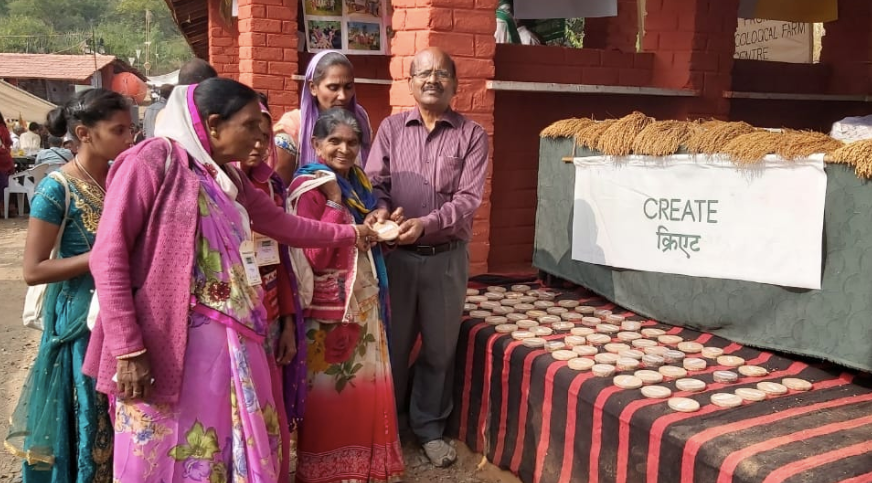
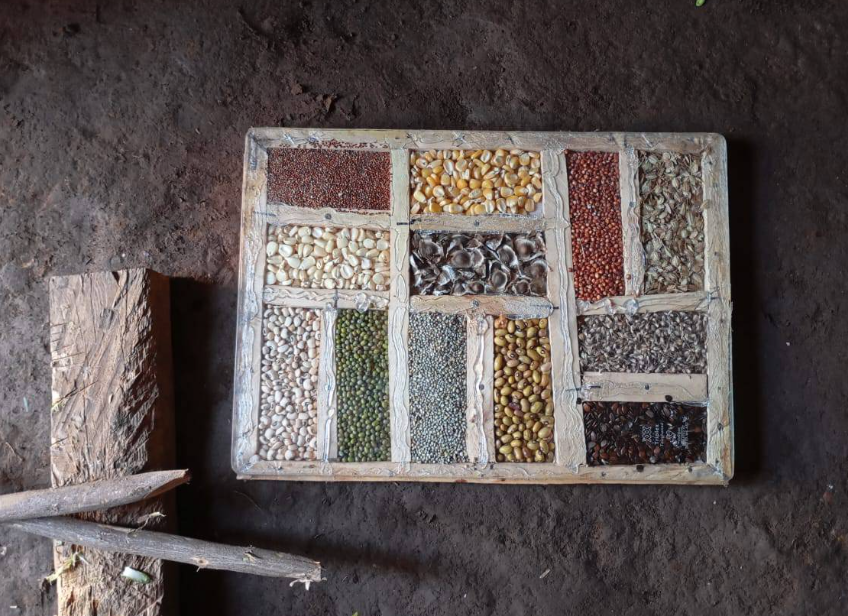
Located in peri-rural Bogor, the SPI training center is a breath of fresh air — simple and green, exuding health and abundance, airy. The center is constructed with bamboo that not only suits the region’s tropical climate but also reflects the founders’ and users’ commitment to sustainability and application of traditional knowledge. Back home, Suresh Kanna and Bakia Lakshmi of CREATE Trust, India, conserve native rice varieties in Tamil Nadu, India. At the Bogor center, they observed the integrated farming system—featuring crop diversity, intercropping, local and seasonal foods, greens, and herbs, seed displays, seed conservation efforts, and a bio-input production unit. They were inspired by “the center’s thoughtful design to provide practical training to farmers and agroecology practitioners.” With SPI, they exchanged their traditional Indian paddy seed varieties for Indonesian varieties.
Karan Singh, founder of Swaraj Farmversity in Udaipur, India, left the Bogor Training Centre impressed by the agroecological innovations, particularly the spaces created for young farmers to experiment, learn, and lead. He is keen to adapt their model of cooperatives to his context.
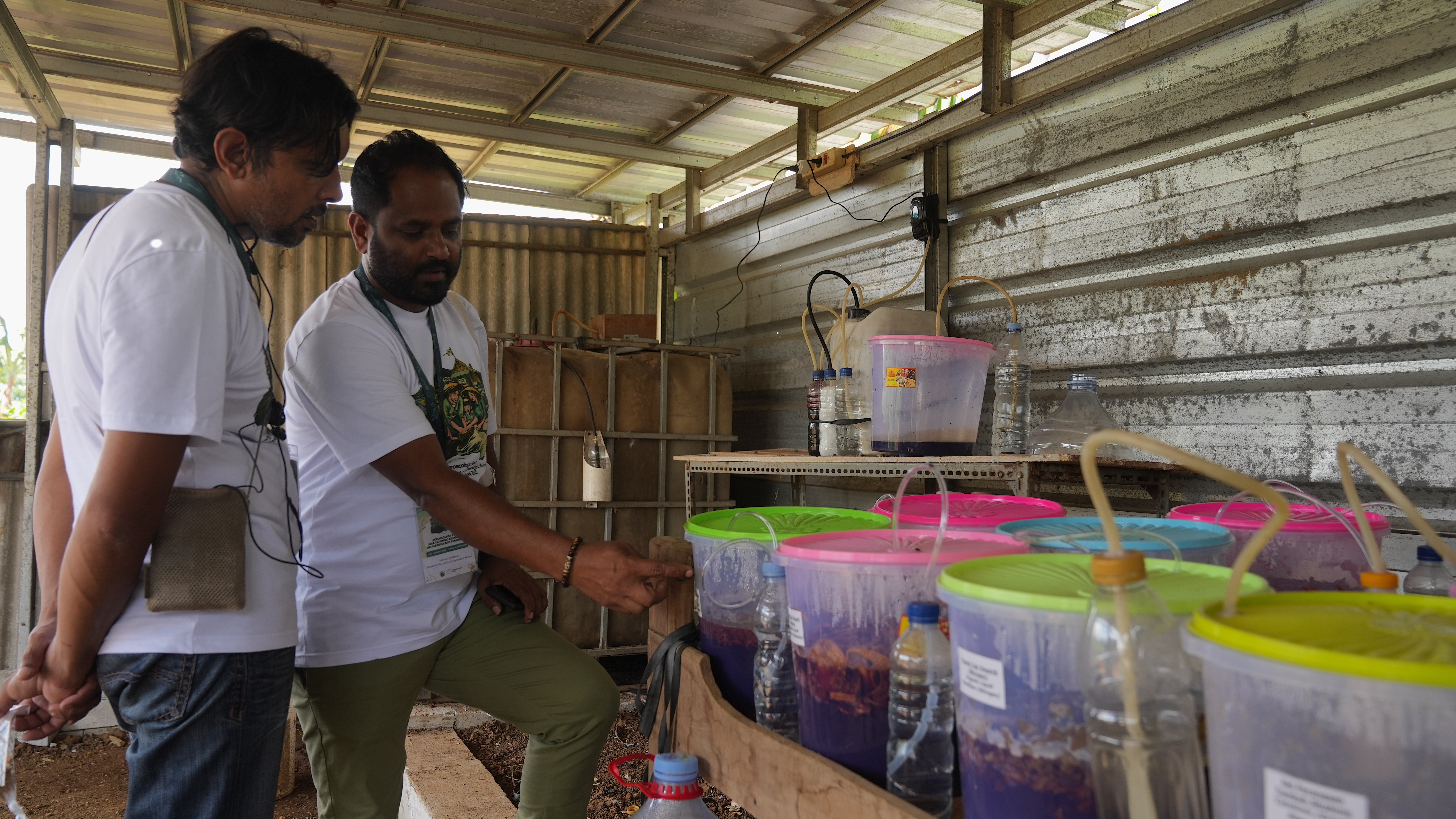
The integrated training program at the center covers the necessary ingredients for a robust agroecology economy, including know-how about making bio-compost, biofertilizers, biopesticides, and biofumigants using natural materials.
How has SPI sought to revive and establish agroecology in Indonesia? M Qomarum Najmi, Head of the Training Center, explained, “After the Green Revolution, our traditional farming practices almost disappeared. We rallied people’s support with our national anthem that beseeches our land to: ‘… be alive… … be fertile… … and… be holy… … for the well-being of our people’. This invocation to our land inspired us to revive traditional practices with support from our Indigenous people, who still followed traditional methods when the Green Revolution was mainstreamed.” Qomarum added, “We now document all our farm information. This information will become our knowledge, and, in time, our knowledge will become our wisdom and part of our training. That is how SPI follows knowledge management of its farming practices.”
SPI’s peasant training program is an integral part of SPI’s efforts to build a national agroecological peasant movement. According to Qomarum Najmi, “To become a member of SPI agroecological cooperatives, individuals must first complete their training in agroecological practices at the center.” During the training, farmers learn about soil preparation, making their own natural fertilizer, seed selection and seed preparation, pest management, inter-cropping, and post-harvest farm-to-market process. Qomarum said that approximately 5% of Indonesian farmers identify themselves as agroecological farmers. In addition, many peasants practice agroecology without necessarily using the term as such.
What is farming like in Indonesia? Qomarum said that over 90% of peasants in Indonesia have small landholdings of under 1 ha. Regarding farm labor, women lead the preparation and sowing of seeds. Men prepare the land, take care of irrigation, prepare biofertilizer, biopesticides, and set up natural pest control mechanisms.
After crops are harvested, they are locally cleaned, processed, packed, and marketed by village SPI cooperatives, cutting out intermediaries as feasible. The emphasis of the entire process is on empowering farmers towards obtaining a fair price for their produce, while promoting ecologically sound farming practices and food sovereignty. SPI cooperatives sell their farm produce through local markets, farmers’ markets, and community-supported agriculture initiatives, strengthening linkages to consumers in nearby urban centers.
Participants in the Learning Exchange appreciated the SPI Center’s integrated approach to agroecology from farming to marketing, with the peasants at the center. Kuluipa Akmatova from the Rural Development Fund, Kyrgyz Republic, appreciated the educational process and formation of collectives, commenting that “these approaches could serve as models for farmer and youth education back home, where we lack structured agroecology training programs.”
On our way to the paddy fields, the half dozen buses of agroecology practitioners and advocates visiting from 25 Asian countries nearly became mired in the mud. The puddled road was lined with trees, hedges of vegetable vines, and a wide irrigation canal. It was a journey to Indramayu’s Food Sovereignty Area (FSA), a former sugar cane plantation converted into a cooperative of rice producers. It was green to the horizon, the realization of years of Indonesian peasants’ perseverance and struggle.
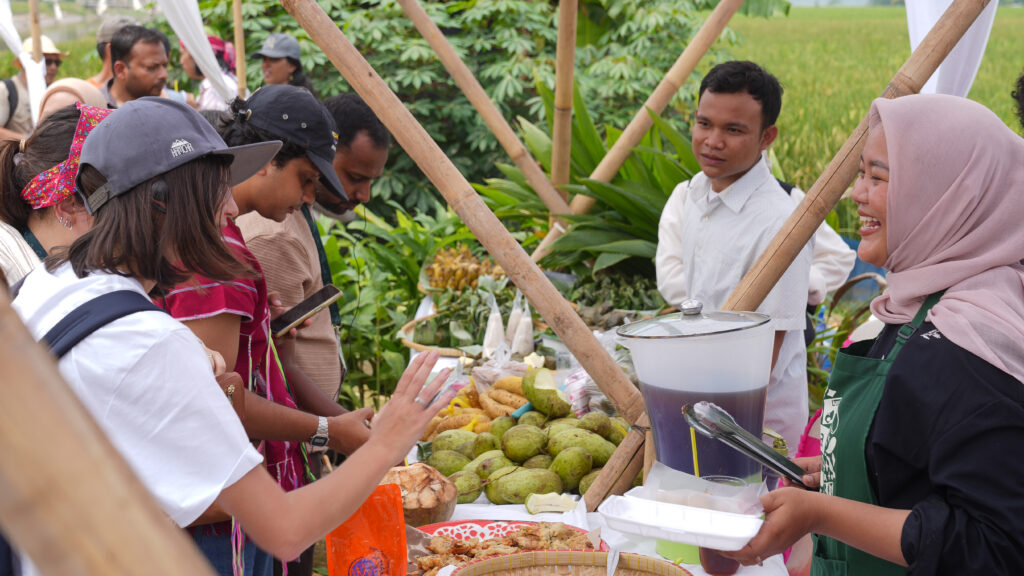
As the participants in the Agroecology Fund’s Asia Learning Exchange on Agroecology Economies arrived for a symbolic rice harvest in Sukamulya village, cooperative members and villagers offered a warm welcome – fresh coconut, banana, and mango as well as traditional dances. Despite language barriers, the atmosphere exuded trust, affection, and a shared respect for safe, fairly grown, nourishing food.
Before the visitors from across Asia’s diverse agroecology movements took a scythe to the rice stalks and delivered them to the event stage, local farmers, SPI leaders, and local government representatives shared their experiences and culture. Not only had they preserved their agrarian traditions, but their folk culture as well. Children and adults danced in costume.
The president of SPI, Henry Saragih, described SPI’s organizational structure at the national, provincial and district levels. SPI cooperatives are separate legal entities to manage their economic activity. The land, he emphasized, is a fundamental right of people to sustain their lives. The government must administer land rights fairly. To achieve food sovereignty in Indonesia, Saragih said, agrarian reform and a nature-friendly, agroecological farm economy are essential.
Lim Nurahum, Representative of the Regent of Indramayu and the Sukamulya Village Community Empowerment Officer, described Indramayu as the key rice production center of Indonesia with a total paddy area of 125,442 ha. (For a comparison, the total area of Indramayu Regency is approximately 209,942 ha, roughly 24.4% of the total land area of this West Java province1). The area hosts 150,359 peasant families. In 2023, Indramayu’s rice consumption was 242,000 tons, and the surplus was 635,000 tons. It contributes 5% of the national supply needs and 15% of the needs of West Java.
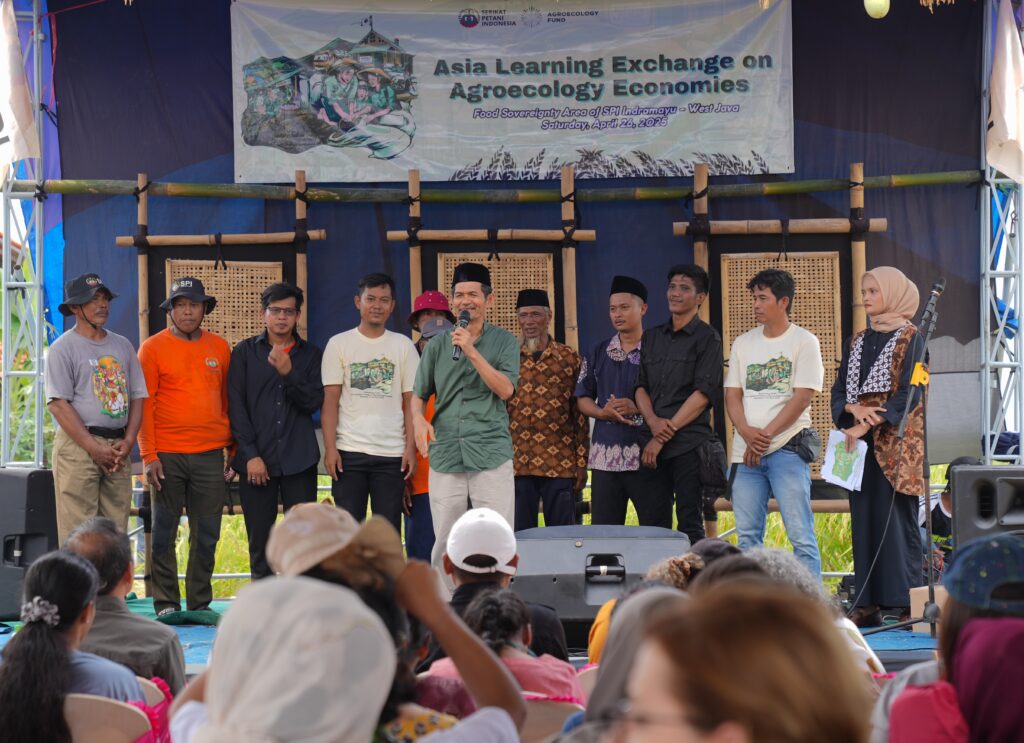
From a stage adorned with banners and rice stalks, young farmers from the region shared their agroecological farming experiences. Benny, a farmer from the region, said that use of natural fertilizer has lowered his production costs. Earlier, when he had purchased fertilizer from the market, his cost was about 15 million Indonesia rupiah per hectare. With natural fertilizer, he gets 8 tons of paddy per hectare per harvest – two crops/year – and his production cost has come down to 5-6 million Indonesia rupiah per hectare without lowering yield. A third crop, sown during the dry season, is a variety of vegetables and fruits. Rotation and intercropping prevent weed growth and improve soil fertility.
Visitors from across Asia were curious about the organic composition of the soil and the yield comparison between agroecology farming and industrial farming. Zulfikar, a farmer and Secretary of SPI, Indramayu, shared that when they practiced industrial farming, their soil pH was 4-5. After they adopted agroecology, their soil pH improved to 6-7. By the third year, their yield equaled that of industrial farming and in some cases was even better.
For the Learning Exchange participants, the interactions with the cooperative members of the Food Sovereignty zone were a moment of reflection and resolve. Nantawan Manprasong from The Field Alliance’s “Agroecology for Safe School Lunch” in Thailand and Vietnam, put it this way: “The Food Sovereignty Area (FSA) has deepened our understanding of the power of collective action, rooted in solidarity and shared values, to drive change. Seeing local farmers take ownership of their knowledge and methods and collaborate within their communities showcased the strength of grassroots leadership. The active involvement of young farmers and youth leadership, supported by the local government, presents a model adaptable to my own region.”
Speaking on the occasion, Angela Cordeiro, the Agroecology Fund’s co-director, expressed her admiration for the achievements of Indonesia’s agroecology and food sovereignty movement. She said: “We had heard about your struggles for food sovereignty, and today we feel its energy in your fields. We learn from you in order to better farmers’ lives across the world.”
As the day came to an end, the farming community managing Indramayu’s Food Sovereignty Area gave us a warm meal and send-off with wicker baskets of rice, a bottle of locally manufactured bio-fertilizer, and a cotton stole – symbols of Indonesia’s struggles, culture, and achievements. The field trips during AEF Asia Learning Exchange 2025 sealed our impressions of what our agriculture most achingly needs: healthy food grown from just soil.
Monitoring Urban Expansion and Loss of Agriculture on the North Coast of West Java Province, Indonesia, Using Google Earth Engine and Intensity Analysis; Table 1. Viewed on May 6, 2025. ↩︎
What is evidence? Why is it important? Who ought to generate it for what purpose? These are just some of the questions answered by the Grassroots Evidence for Agroecology Initiative.
To counter industrial agriculture’s powerful claim that they feed the world, we need to present strong evidence that agroecology can be scaled as the foundation of sustainable and equitable food systems across the world. But what makes a compelling case and who ought to present it to whom, for maximum influence and effectiveness?
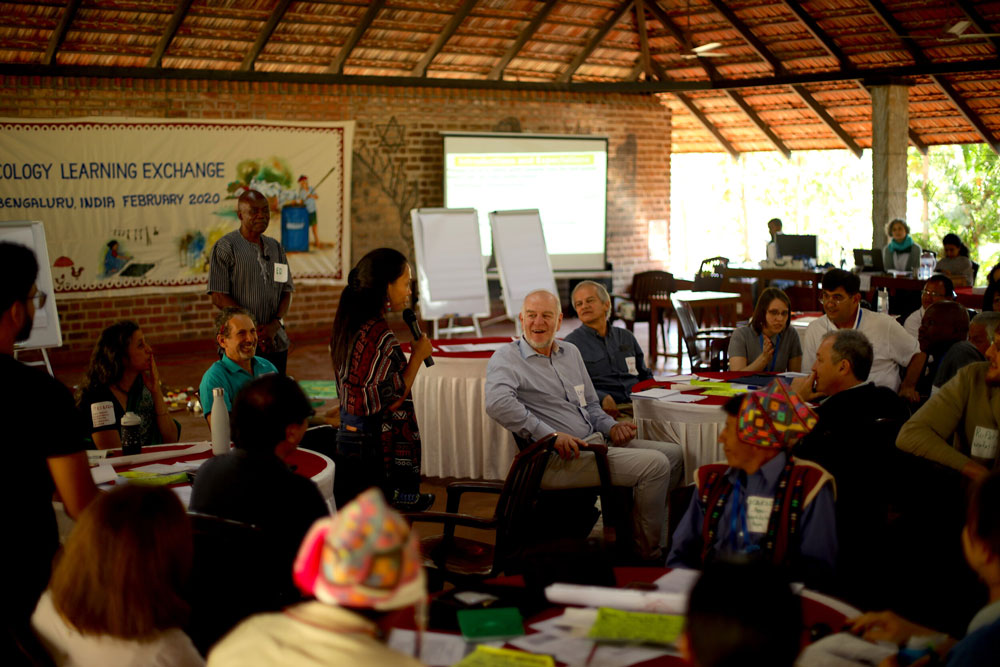
In 2020 at the Agroecology Fund Learning Exchange in India, the way to approach evidence building was a key topic of discussion among grantees, funders and allies. Three important messages emerged:
1. There is a need to develop a new narrative of what constitutes evidence;
2. The process of evidence gathering must be participatory and creative;
3. Participants recommended that Agroecology Fund should extend support to grantees for gathering and disseminating evidence for agroecology.
As a result of these conversations, Agroecology Fund partnered with Statistics for Sustainable Development(Stats4SD) in late 2020 to launch the Grassroots Evidence for Agroecology (GEA) initiative. Stats4SD is a not-for-profit, social enterprise that promotes better use of statistical methods for decision-making to benefit society and the environment. Throughout 2021 and 2022, four grantees volunteered to participate in the GEA pilot, receiving methodological support from Stats4SD. The GEA pilot tested and developed a process to support grassroots organisations’ efforts to build and communicate evidence to their target audiences and demonstrate their impact. During the pilot phase, participants developed four evidence-based cases:
*Two cases by Slow Food International and Slow Food Uganda;
*One case by Grupo Autónomo para la Investigación Ambienta (GAIA), Mexico;
*One by Centro de Desenvolvimento Agroecológico do Cerrado (CEDAC), Brazil.
The results from the pilot phase were shared in this report in early 2024.
In 2024, we also launched an online course in multiple languages to share the methodology. Enrollment remains open. The Agroecology Fund also opened an internal call for current grantees and awarded 15 small grants to support documentation and production of communication products. These grantees received methodological support of the Stats4SD team throughout 2024 . The resulting evidence-based cases were organized into an Online Catalogue, a platform for sharing evidence built from the grassroots perspective. The cases in this catalog were developed by grassroots organisations using a structured approach to turn their knowledge and experiences into compelling arguments for agroecology. By using rigorous evidence to support their claims, these cases aim to influence farmers, communities, donors, policymakers, researchers and consumers—key actors in the transformation of food systems.
On February 25, 2025 Agroecology Fund held a webinar to launch the online catalog and hear from grassroots partners from Asia, Africa, and Latin America, including grantee partners Asociación ANDES (Peru), ESAFF Uganda, and GRAVIS (India) about their experience in documenting and communicating evidence for agroecology more strategically. The launch event was attended by hundreds of people from across the globe and generated much attention and engagement. You can watch the recording here.
This collection is an evolving resource, and we invite more contributions from grassroots organisations working to build the case for agroecology. We encourage you to explore the cases, learn from their insights, and join us in strengthening the movement, the practice and the science that drives the quest for sustainable and just food systems. We extend our gratitude to the farmers, Indigenous communities, and grassroots groups whose experiences shape this work. Join us in sharing and building up the evidence for agroecology!
The Agroecology Fund (AEF) is thrilled to announce the first IPA-Global initiative round of grants (IPA means “Investigación Participativa en Agroecología” or Participatory Research on Agroecology), aimed at strengthening advocacy and participatory research for resilient food systems. This grant call, “Strengthening Climate Resilience by Scaling Up Agroecology: Collaborative Research and Advocacy to Advance Food Systems Transformation,” focuses on empowering civil society organizations and social movements to champion agroecology as a key climate solution. Thanks to the Waverley Street Foundation’s funding, 22 grants, with awards of up to USD 190,000, will support collaborative initiatives for up to 24 months on four continents. Additional grants will be made next year and in subsequent years.
Research for Policy Changes and Food Systems Transformation
IPA-Global seeks to catalyze change by supporting multi-stakeholder collaborations, which bring together farmers’ organizations, Indigenous Peoples, youth, women, academics, and climate justice networks. By combining grassroots activism with participatory research, these collaborations will craft and implement advocacy strategies that elevate agroecology to the forefront of climate policies. In many instances, there is close collaboration with governments, from local to national. This initiative continues the highly successful IPA-LAC initiative (focused on participatory action research in Latin America and the Caribbean). It offers a crucial next step in scaling advocacy for agroecology and climate solutions across new regions.
By aligning advocacy and participatory research, collaborative initiatives will shape and influence multi-level policies—national, regional, and international—while also influencing sub-national policies. Key focus areas of the initiatives include policy advocacy to adapt to and mitigate climate change via agroecological practices and Indigenous knowledge, such as seed and biodiversity conservation and reducing agrochemical input dependency. The initiative also underscores the inclusion of youth and gender perspectives in agroecological transitions.
Selected collaborations will explore critical questions such as: What policy opportunities exist to scale agroecology in each region or country? What changes are needed to create an enabling environment for resilient food systems?
Advocacy campaigns will be supported to bolster creative communication strategies, including visual media, workshops, and interactive learning exchanges. New tools, such as agroecological curricula and observatories on public policies and socio-environmental conflicts, will also be developed. The data generated will be translated into actionable communications products such as policy briefs, reports, and multimedia content aimed at influencing policymakers and civil society alike.
IPA-Global Learning Community
The Agroecology Fund has invited awarded collaborations to join the IPA-Global Learning Community, which promotes the co-creation of a cross-learning agenda amongst collaborators, with inclusivity and diversity as key principles of the learning process. The wide variety of experiences and shared passion for impactful advocacy set the stage for a rich learning opportunity. On Dec 4th, all IPA-Global collaborative partners gathered online to discuss a common agenda for 2025 and the functioning of this Learning Community.
Advocacy through Participatory Research
At the heart of the IPA-Global initiative is Participatory Action Research (PAR). This approach involves grassroots communities in identifying research questions that address gaps in public policy and in documenting effective strategies for advancing agroecology and climate justice. The research generated through this initiative will support advocacy efforts to influence national and regional policies, including their effective financing and implementation. It is rare to have the opportunity to conduct advocacy, reflect on lessons about impacts, and adjust strategies accordingly. This inclusive approach fortifies grassroots power, mitigates power imbalances, and strengthens community ownership over advocacy processes. By integrating lived experiences into research, PAR ensures advocacy efforts are credible, legitimate, and impactful, fostering collaboration and trust among diverse stakeholders. PAR generates robust, actionable insights to inform advocacy campaigns and fortifies networks critical for holding governments accountable for advancing agroecology, an intersectional solution increasingly present in national food, climate, and development strategies.
Global Reach and Impact
IPA-Global grants are tailored to organizations and networks working in 12 countries across Africa, the Americas, Asia, and one broad region (the European Union). Funded activities will include research, advocacy campaigns, policy dialogues, and learning exchanges among collaborative networks. By the end of the grant period, the initiatives will deliver research-informed policy recommendations, actionable advocacy roadmaps, and creative and publishable communication outputs, driving agroecology as a transformative climate and food systems solution.
The IPA-Global initiative reflects the Agroecology Fund’s commitment to fostering agroecological research and turning that research into real-world impact. By building bridges between research and advocacy, this initiative will help shape the future of food systems policy at a time when climate action has never been more critical.
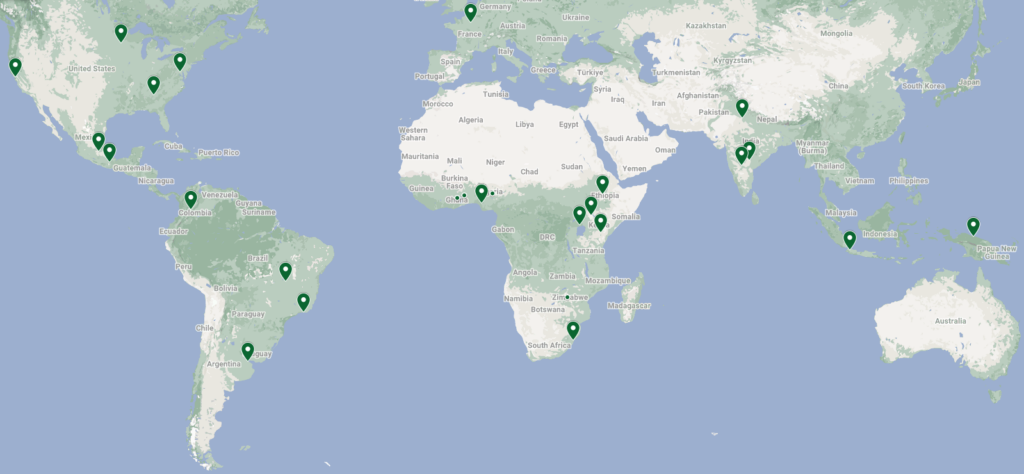
IPA-Global Geographic Coverage
IPA-Global Initiatives and Collaboratives’ Lead Organizations
AFRICA
Ethiopia
Ethiopian Sustainable Food Systems and Agroecology Consortium (ESFSAC) – “Collaborative Research and Advocacy to Advance Agroecology-Based and Climate-Resilient Food Systems Transformation”
Kenya
Biodiversity and Biosafety Association of Kenya (BIBA Kenya) – “Strengthening Climate Resilience by Scaling Up Agroecology: Collaborative Research and Advocacy to Advance Food Systems Transformation”
Ogiek Peoples Development Program (OPDP) – “Research and Advocacy to Advance Food Systems Transformation Among Indigenous Hunter-Gatherer and Pastoralist Communities in Kenya”
Nigeria
Health of Mother Earth Foundation (HOMEF) – “Strengthening Climate Resilience Through Agroecology Research and Advocacy”
South Africa
Biowatch South Africa – “Strengthening Climate Resilience by Scaling Up Agroecology: Collaborative Research and Advocacy to Advance Food Systems Transformation in South Africa”
Regional: Nigeria, Kenya, Togo, and Uganda
Alliance for Food Sovereignty in Africa (AFSA) – “Connecting Young Agroecologists and Climate Advocates for Transformative Food Systems”
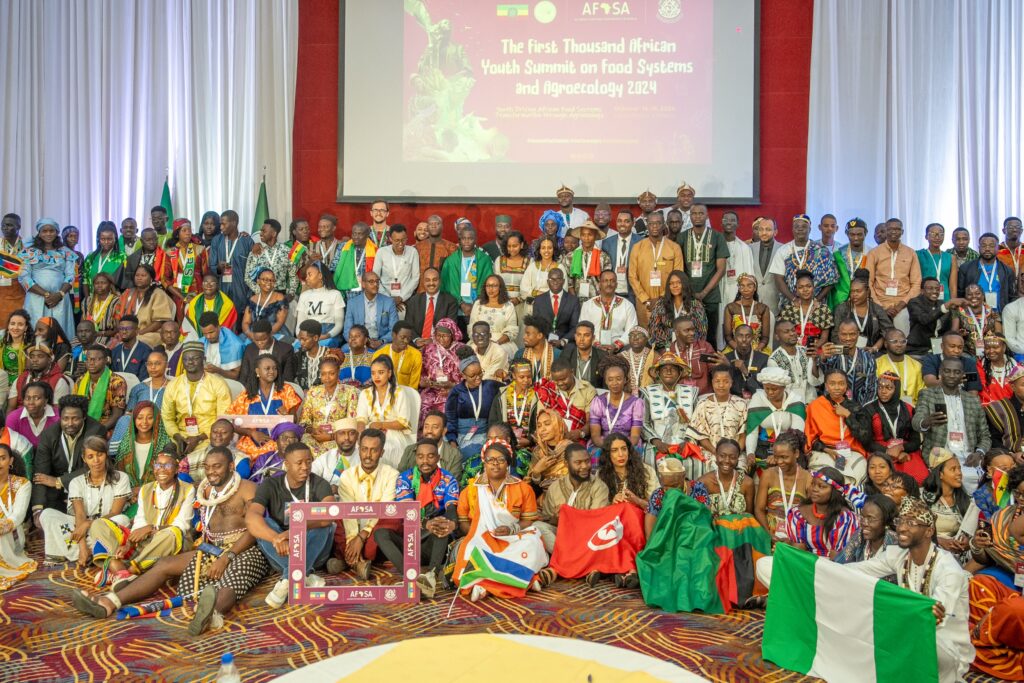
Youth Summit organized by the Alliance for Food Sovereignty in Africa (AFSA), one of the IPA-Global collaborative partners. AFSA’s participatory research initiative focuses on the critical role of youth in policy advocacy for food systems transformation and climate action.
AMERICAS
Argentina
Mesa Agroalimentaria Argentina (MAA) – “Territorial Plan for Participatory Research and Policy Advocacy Action”
Brazil
Articulação Nacional de Agroecologia (ANA) – “Agroecology Networks Against Climate Change: Action Research From the Ground Up”
Via Campesina Brazil – “Resilience in Peasant Territories in Response to Climate Change in the Amazon”
Colombia
Corporación Grupo Semillas (CGS) – “Policy Advocacy to Strengthen Agroecology, Agrobiodiversity, Peasant, Family, and Community Agriculture in Response to the Climate Crisis in Colombia”
Mexico
Instituto Agroecológico Latinoamericano – México (IALA México) – “Design Territorialized IALA Mexico’s Epistemological and Curricular Approaches as a Tool to Bolster Climate Resilience and Advocacy Efforts and Strengthen Agri-Food Systems”
Xilotl Asociación para el Desarrollo Social A.C. (Xilotl) – “Resilient Tlaxcala: Agroecology and Participatory Action Research in Defense of Native Maize for the Transformation of the Food System”
USA
National Family Farm Coalition (NFFC) – “The Bedrock of Resilient Food Systems”
National Black and Food Justice Alliance (NBFJA) – “Agroecology and Black Agrarians: Unsung Climate and Culture Catalysts”
MinneAg Network – “Policy Design to Strengthen Agroecology Among Small and Medium-Scale Producers as a Pathway to Climate Resilience”
Pesticide Action Network – PAN North America – “Policy Learning From a Multi-Stakeholder Process to Enact a Sustainable Pest Management (SPM) Roadmap in California, With Lessons for Other States”
ASIA
India
Centre for Sustainable Agriculture (CSA) – “Kisan Mitra: Building Policy Ecosystem for Scaling Up Agroecology-Based Food Systems”
National Coalition for Natural Farming (NCNF) – “Participatory Action Research for Strengthening and Scaling Agroecological Transitions”
Indonesia
Serikat Petani Indonesia (SPI) – “Developing Food Sovereignty Areas to Strengthen Climate Resilience Through Collaborative Research on Agroecology Practices and Advocacy on Agroecology-Based Public Policy to Advance Food Systems Transformation”
Koalisi Kampus Untuk Demokrasi Papua (KKDP) – “Understanding the Food System Transformation and Resilience Strategy of Indigenous Papua”
Regional: India, Indonesia, Cambodia, Philippines, and Thailand
Focus on the Global South – “Agroecology and Climate Justice: Strengthening Social Movement Collaborations in Asia”
EUROPE
France
Confédération Paysanne – “Survey of Water Management on Small-Scale Farms to Reinforce Advocacy on Sharing of the Commons”
******
Subscribe to our newsletter for updates on the progress of the IPA-Global grantees and their inspiring work toward building a more just, resilient, and agroecological world.
Territorial markets are embedded in societies as critical public spaces where traditional, healthy, medicinal, biodiverse crops are found, where smallholder farmers have the option to sell directly to consumers and reduce dependence on intermediaries, and consumers have a chance to buy fresh food directly from farmers at fair prices.
Rooted in territories and communities, territorial markets have existed for millennia and go beyond economic exchange by strengthening socio-cultural ties, relationships between food producers and consumers, and harnessing trust and solidarity. Traditionally, these market systems build resilience for farmers, families and communities. But they are now increasingly threatened by a combination of forces.
Corporate concentration and underinvestment in municipal infrastructure has led to the neglect of territorial markets and localized food systems have lost some of their resilience. Global commodity markets and corporate-controlled supply chains are prioritized by public and private investors, leaving us all at risk. Finding solutions to these challenges calls for speed and urgency in supporting grassroots innovations.
The Agroecology Fund supports collaborative initiatives in more than 90 countries globally, and this year, has escalated efforts to support the growth and strengthening of agroecology economies. During our recent webinar ‘Territorial Markets – Healthy Food, Real Relationships, and a Fair Deal’, attended by nearly 400 participants from 71 countries, we learned about grantee partner initiatives to strengthen territorial markets and the challenges of scaling this key component of local food systems across diverse countries, regions and territories.
Through the advocacy of farmers and consumers – often working closely with local governments – territorial markets are enjoying an overdue renaissance. The markets have evolved and take many forms – from municipal plazas to WhatsApp platforms to purchase local foods to public purchasing programs to a seed exchange fair We heard from grassroots, farmer-led networks from Asia, Africa, and Latin America, from countries including Sri Lanka, Benin, Mali and Peru, about their experience revitalizing fresh food markets and strengthening links among farmers, consumers, and public officials.
Against this backdrop, the Human Development Organization (HDO), a development organization working with the marginalized communities including tea plantation workers in Sri Lanka to promote their right to food, spoke about working with minority women plantation workers to grow and market agroecological products.
Women tea plantation laborers historically have had little experience cultivating food agroecologically. Through territorial markets, this initiative supports the transition from worker to farmer, and from farmer to entrepreneur for women. There has been tremendous progress over the last five years.
Les Jardins de l’Espoir, Benin showcased their intervention, Eden’s Farmers Market, and how they used digital channels and social media to launch the initiative and raise its visibility. Participants heard about how the market has evolved and improved, and the challenges and opportunities towards creating healthy and sustainable food systems.
Working in collaboration with several networks and organisations, Les Jardins de l’Espoir shared how their focus on agroecology “is helping us to protect biodiversity, nature-friendly food systems, inclusive food systems, as well as commercial systems that offer favourable and sustainable price points. Since 2021, we have been expanding the network to ensure that as many farmers have access to Eden Farmers Market as possible.”
The Asociación ANDES, Peru shared about the network of Eco Markets they are creating across the country.
ANDES shared how their markets target, “ people in the lower income bracket. We have a standard for fixing prices across different regions. Our products are recognizable through the logo and our Fruit of the Earth markets – where we …. encourage and facilitate barter trade. We also participate in eco fairs where we educate consumers about the health benefits of agroecological foods.”
We also learned about the main findings of the “Food from Somewhere”report, launched by The International Panel of Experts on Sustainable Food Systems (IPES-Food).
Speaking to findings from the report, Shalmali Guttal from IPES Food observed, “Global corporate food chains have demonstrated catastrophic vulnerability to shocks, while bringing unhealthy, ultra-processed food into the markets. We need a shift to a completely new model of food provision – to resilient, localised food systems and food webs.” She stressed the need to encourage consumers to buy directly from producers and to push governments to create an enabling policy environment for territorial markets.
“There are many kinds of territorial markets such as mass marketing spaces like public markets, informal markets, street vendors, farmers markets, peasant markets, wet markets, specialty markets. Then there are bulk community spaces. There are food hubs, cooperatives and network markets. There are also independent local businesses and direct producers to consumer markets through community supported agriculture. There are also digital sales, farm shops, urban agriculture and a number of different channels with potential to actually build up territorial markets and territorial food systems to something much broader,” Guttal observed.
Further stating, the research showed that territorial markets build food security and resilience on multiple fronts—they demonstrate increased food access, health equity and environmental benefits and at the same time, boost and support community solidarity and cohesion. They also make food accessible and affordable, especially for low-income populations.
“Territorial markets support decent prices and steady incomes for producers, especially women and youth. In Thailand, for example, green farmers markets offer producers higher margins than big retailers and these green farmer markets in Thailand and across much of Southeast Asia account for 60 to 80 percent of the income of small-scale food producers and vendors,” Guttal shared.
You can access the recording of this webinar and the previous webinars in our Agroecology Economies series here.
The Agroecology Fund works with a diverse pool of grassroots organisations and networks including Indigenous youth networks. Indigenous communities face existential threats to their ancestral lands from destructive forces of colonialism. These lands are crucial for sustenance and spiritual practices.
During the recent Agroecology Fund African Learning Exchange that brought together more than 100 farmers from diverse cultures and communities, Indigenous peoples shared about their journey in agroecology.
A Learning Journey
“We work with Indigenous communities in Kenya, particularly for the promotion of their social and cultural rights, said Bernard Loolasho – an Indigenous youth leader and convener at the Kenya Indigenous Youth Network. “Agroecology came into the picture when we started talking about the food sovereignty of Indigenous peoples and since then we have worked with the support of Agroecology Fund in three communities in Kenya. The Yaaku tribe in Laikipia, Endorois in Baringo and Sengwer people in Trans Nzoia, Cherang’any Hills.”
Ongoing interventions include support for creating seed banks with women in the Sengwer community in Cherang’any and agro-pastoralists farmers in Baringo as well as beekeeping farmers in Laikipia among the Yaaku community.
“So far, we have implemented the first year, and we have noticed successes in documenting culture, traditional practices and techniques of beekeeping and seed banking. We have managed to work with farmers, both the elderly and the young, and have facilitated exchanges in intergenerational knowledge transfer. It’s a learning journey. We long to see what else could come out of these interactions and our journey to food sovereignty as Indigenous peoples in Kenya. We are enjoying the journey and the learning,” he said.
Ultimately, he says, they would look forward to seeing how best indigenous peoples and indigenous voices are raised and how best to amplify them. For a very long time, Loolasho observed, indigenous people were not recognized and were significantly marginalized. Stressing that “even now, their rights to food in particular is not guaranteed. Their right to seeds is at risk. So, ours is a journey to food sovereignty for indigenous people.”
Identity and Land Rights
“I’m Juliana Loshiro, an Indigenous young woman in the Yaaku community. We live in Mukogodo Forest as hunter-gatherers. They have not recognized us as a tribe because our people settled in Mukogodo forest and that is where we are now fighting for identity. I’m the only remaining fluent speaker of the Yaaku dialect in my community after my grandfather Leriman who is 113 years old. I’m amongst 8,000 people who identify as Yaaku.”
Loshiro says “we are doing more of language and cultural utilization and trying our best to come up with a strategy to fight for all our rights – be it in culture, food security and land rights. Hunter-gatherers are facing a lot of challenges and we are essentially being evicted in our own lands. We are doing advocacy on the ground and writing memorandums to the government to consider us, because if we are pushed out of our homes, where will we go?”
“But we are more hopeful now and we have seen the light. We are using agroecological solutions to sustain ourselves even as we move into the future and we are also exploring value addition. We are good at beekeeping and using it to support our livelihoods. We have brought together more than 3,000 women who are interested in beekeeping and value addition and through such solutions, we are changing lives and narratives,” she said.
Diel Mochire Mwenge is a Chief among an Indigenous community called Batwa and, the director of the Programme Intégré pour le Développement du Peuple Pygmée in the Democratic Republic of Congo, a grantee partner of the Agroecology Fund. The organization works with local communities to promote agroecological solutions and more so, among the Indigenous people, creating linkages between farming and biodiversity preservation.
“We do all of this not only with technology, but also with the help of traditional knowledge in such areas as understanding when and where to plant. The Batwa are one of the two main indigenous hunter-gatherer communities in DRC and the population is about 100,000 in the Lake Tumba region of north-west DRC, and also a few thousand in Kivu near the Uganda and Rwanda borders,” he said.
Mwenge says besides increasing production, they are also doing value addition and working with farmers to improve access to the markets. Some of the challenges they face are linkages to markets since indigenous communities are often found in areas that are cut off from development and infrastructure.
All in all, the Chief recognized the Learning Exchange as a platform to deepen his understanding of agroecology within the context of indigenous, marginalized communities – learning and sharing with others in the East, Central and Africa region. The acquired knowledge, he said, will go into scaling their interventions.
Agroecology Fund’s African Learning Exchange on Agroecology Economies gathered more than 150 people representing organizations working towards agroecological food and nutrition sovereignty. It was an opportunity to learn more explicitly from Agroecology Fund grantee partners in Africa about what they are doing, how they are doing, and to learn from their success stories about how their community-led solutions might be replicated in different contexts. This rich, in-person gathering was also a chance for partners to brainstorm about agroecology as a business and enterprise. The backdrop of the exchange was Kufunda Village – Kufunda means ‘learning’ in Shona, the language spoken by 70% of the people of Zimbabwe. The village, on the outskirts of Harare, Zimbabwe, is a learning center with a focus on vibrant and healthy local communities.
At an early gathering, Angela Cordeiro, an agronomistand Co–Director at Agroecology Fund spoke about the importance of thinking about agroecology simply beyond production. She encouraged the participants to think more expansively about agroecology, and stressed the need for movements to create economies and tap into the significant potential for positive socio-economic development in local communities. The power inherent to transforming structures is a significant marker of why grassroots agroecology movements hold the possibility to transform global food systems—and why Agroecology Fund centers these movements in their grantmaking.
“The root of the word economy, or its meaning, is to take care of the house or to take care of your home. The economy has been kind of controlled by one way of taking care of the home and we are here to brainstorm, to exchange ideas on how we are trying to develop new ways of taking care of the home through innovative approaches such as the participatory guarantee system, territorial markets, commercialization as well as financial mechanisms,” Cordeiro said.
Agroecology Fund grantee partners from across the African continent reflected on what the word economy means in their diverse languages and cultures, and on the positive socio-economic benefits associated with agroecology. In the Democratic Republic of Congo where the Lingala language is spoken, ekonzo means economy, in Swahili the economy translates to uchumi. For Yoruba people in Nigeria it is okowo, in Zambia it is phindu and in Dagara a language spoken in Burkina Faso, economy translates to na-bomo.
The discussions that were held on the economy and agroecology, and how these concepts translate in different languages highlighted that there can be many different ways of commercializing foods produced in synchronicity with nature. Conversations explored market practices that are favorable to the peasant farmer and peasant families in rural and urban areas, as well as the revitalization and investment in larger territorial mass markets.
Dioma Komonsira, an action-learning and advocacy coordinator for Groundswell International West Africa – an Agroecology Fund grantee partner– said that there is no contradiction between building a business around agroecology and upholding social values.
“We will soon be publishing a survey that we did focusing on 200 to 300 women-led agroecological enterprises in Mali and Senegal. There is a big and untapped market for agroecology products, bigger than the products available at the moment. But at times the women are limited in their production capacities due to challenges in accessing financing. We are seeing that there is potential in women organizing themselves in cooperatives. There is also an urgent need to train women or peasant farmers in general in how to develop a business plan,” he said. The Agroecology Fund is currently supporting 15 African networks that support emerging enterprises to create business plans.
Some of the innovative practices being used by women peasant farmers to raise much needed financing are anchored in social and solidarity economies – group savings or village fundraising strategies to help address the most pressing needs they face as a community.
Among other practices shared by grantee partners during the exchange included the Kenyan and Senegalese women’s solidarity funds in the form of rotating microcredits called “solidarity calabashes”. These funds are a way to mobilize local capital through donations from the local community to address their most pressing needs, including hunger.
From these conversations emerged ideas about how agroecology economies can thrive within varied communities, utilizing similar ideas and frameworks adapted to each local context as the respective communities see fit. The connections made among grantee partners is one of the major benefits of these learning exchanges. There is power in connection, and the mycelial-like network of grassroots agroecology movements grow stronger with each engaged interaction.
In various shapes and forms, peasant and family farmers from across the African continent came together from their respective countries to showcase the best of their seeds and foods. As part of the Agroecology Fund’s Learning Exchange on Agroecological Economies, Agroecology Fund grantee partners visited this year’s Good Seed and Food Festival in Harare to share their experiences and interact with the best of Zimbabwe’s traditional and organic seeds and food from the four corners of the country.
Carmel Kifukieto Manzanza from the Democratic Republic of Congo experienced firsthand how prices vary depending on the route that the farmer takes to sell their produce, “when farmers sell directly from their farm or as an individual, they often sell at a price that is lower than the market rate. But when there is an event such as this (festival), that brings many people together, the prices then become favorable for rural peasant farmers who are often cut off or at the margins of the market systems. And, yet the prices are also favorable for the consumer compared to what they would have paid in other markets such as a supermarket. Overall, it was an opportunity for farmers and local peasant communities to showcase what they can do.”
January Watchman Mvula from the Sustainable Rural Community Development Organization in Malawi, “learned that Zimbabwe as a country is investing much of its resources in organizing farmers’ cooperatives and in particular, peasant farmers from local communities. By doing that, they are also transferring various skills like drying for preservation and processing for value addition.”
What stood out for Ruth Badubaye from the Centre d’ Appui a’la Gestion Durable des Forests Tropical in the DRC are the innovative, value addition activities undertaken by peasant farmers. “They had packaged their products in ways that are very appealing to consumers while still maintaining a price range that is fair to the consumer. I took some time to learn how the farmers produce such big fruits. The watermelons and pumpkins were very big. I also shared what I know and, in the end, I realized that there is always a way to learn, exchange and improve knowledge all around. My take away is that in this community, the post-harvest processing or value addition is really done at a more advanced level. In DRC, people only do value addition to fruits and vegetables and only for household consumption. In Zimbabwe, the community does it for commercial purposes and this is very impressive as it helps put more money in a farmer’s pocket.”
A member of the African Alliance Against Industrial Plantation Expansion, Nasako Besingia grantee of the Agroecology Fund, observed, “I have interacted with various farmers’ gatherings and the idea of a food and seed festival is not unique to Zimbabwe, as we have similar festivals in Cameroon. But for the most part, that is where the similarities end. We have many more crop varieties than what I saw and many more farmers than what I saw. Perhaps the issue of fewer farmers is down to the fact that the festival was hosted in an urban area which limits the participation of peasant farmers.
“I come from Mundemba in Cameroon the headquarter of the Korup National Park
which extends over a huge chunk of mostly undisturbed forest. There, we have lots of plant varieties or what we call non-timber forest products such as vegetables and many other food varieties, that grow without human or farmer intervention”, said Besingi.
“But I also saw a few varieties of crops that we do not grow in Cameroon or Central Africa and a number of my colleagues from Gambia purchased some traditional cereal and vegetable seeds for planting when they return home.
“If you were to visit a similar food and seed festival in Cameroon, you will have access to foods that have come directly from the forest, like native tubers similar to yam and not necessarily cultivated. Our soils are still very healthy and in fact, if you try to grow say Irish potato using fertilizer, it will all rot and go to waste. It means you are adding more to the plant than it needs.”
“I did not see forest products in Harare but, for us, they are very important to our food systems in both rural and urban areas. There are forested areas in Zimbabwe, what happened to their forest foods?
“This is the beauty of farmers from across the continent meeting, interacting, learning and sharing from each other. You get to see and understand what is possible, and you are able to think beyond what you can see and to try new agroecologically innovative ideas. Overall, it was a fantastic festival and I had a great time!”
Written by Agroecology Fund Advisor Milka Chepkorir All photo credits: Milka Chepkorir
On June 21, 2024, the Agroecology Fund was invited to a school agroecology learning field day at Ugolwe Primary School in Siaya County, Kenya. The event was organised by Agroecology Fund grantee partner the Schools and Colleges Permaculture Programme (SCOPE) Kenya, who are a beneficiary of the Agroecology Fund through the regional umbrella body, ReSCOPE. Milka Chepkorir, Advisory Board member of the Agroecology Fund, attended the event and shared her experience.
Schools and Colleges Permaculture Programme (SCOPE) Kenya is a national capacity-building and networking organisation founded in 2014. The organisation works with schools’ communities, to promote practical ecological land use and management practices, through agroecology approaches, to address the challenges of food & nutrition insecurity, increasing poverty levels, environmental degradation and biodiversity loss in Kenya. Currently, SCOPE Kenya network has a membership of 16 civil society organisations (CSOs), working with 133 schools’ communities in 13 counties in Kenya.
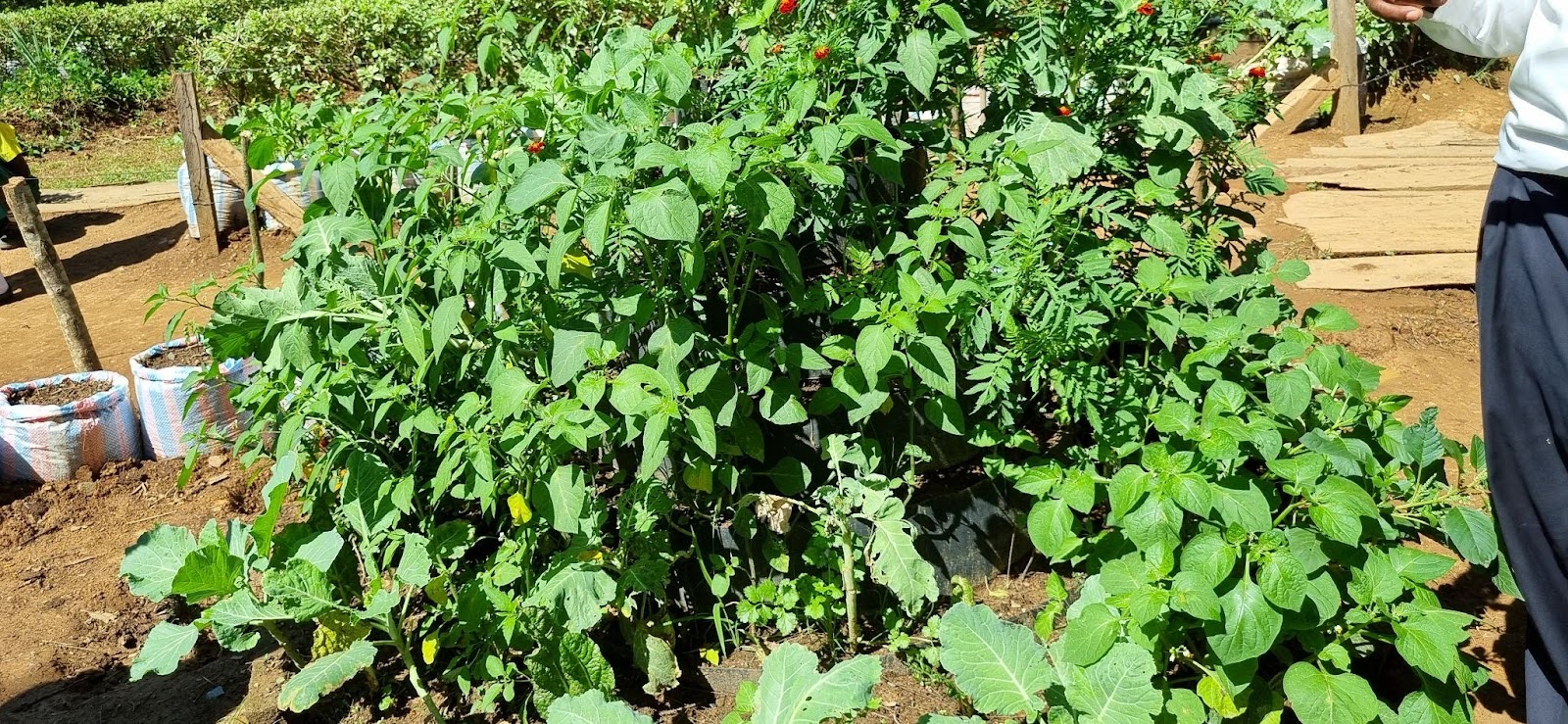
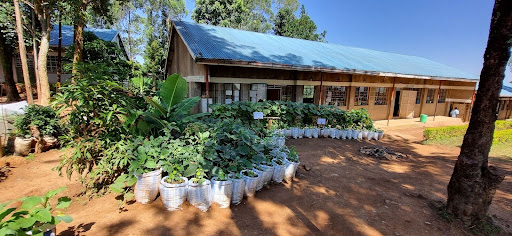
The types of garden designs in the school compound include a rabbit system, fruit forest, key-hold gardens, sack gardens, a food plant circle, and much more.
Food plant circlesMixed vegetable garden
The gardens are set in front of the school classes and offices. This structure and design choice primarily give life to the school environment. This provides things to look at and admire as parents and visitors wait to be served at the school offices.
Gardens set in front of school administration buildings
At an early age, students are taught to be environmentally responsible by not using plastics either in the general school environment or in the gardens. This is a behaviour they have taken back to their homes to influence their villages. By working in the gardens together, the students learn to be tender and care for the plants in front of their classes and the school environment.
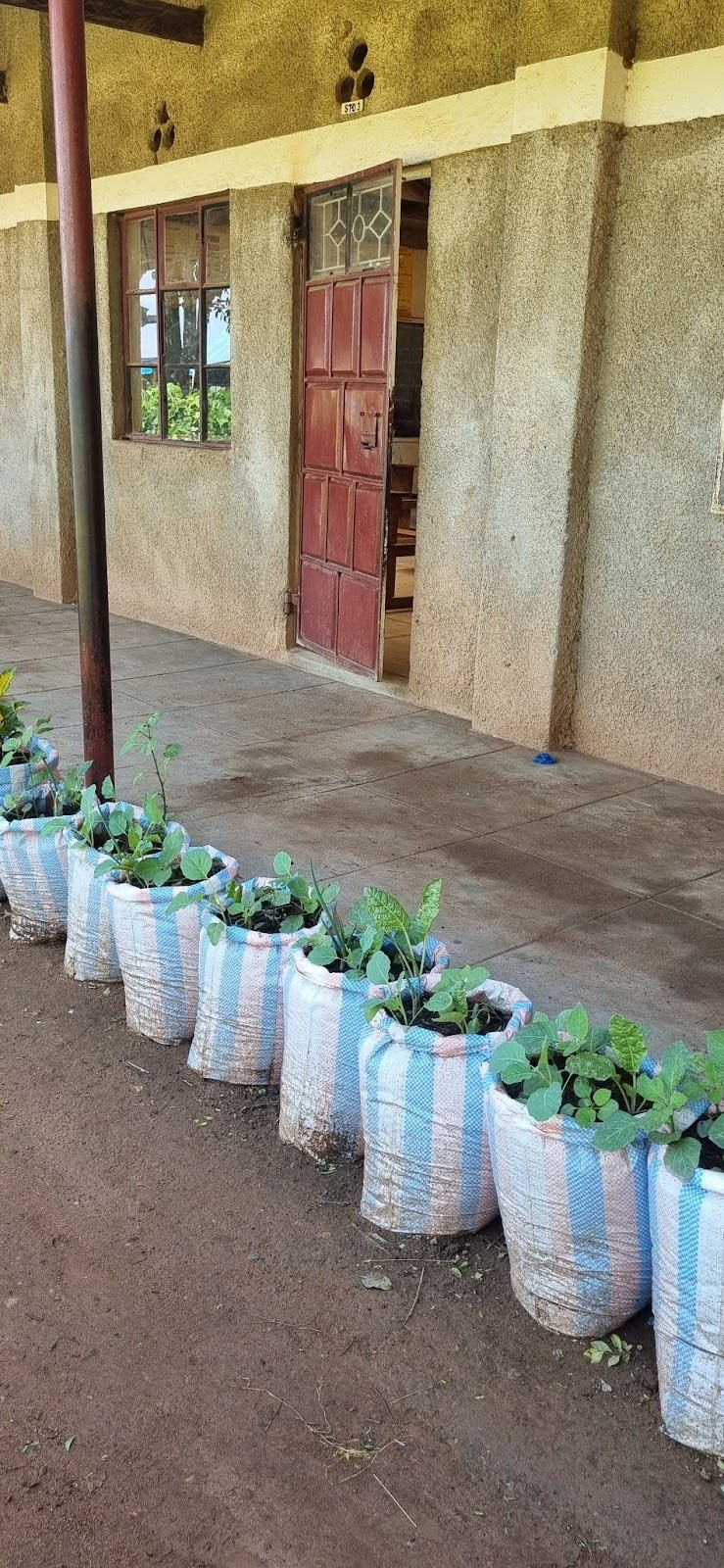
Grade 1-3 projects in front of their classes
Contribution to the current school curriculum
The youngest students, in grades 1-3, have been offered opportunities to put into practice the skills they learn from the Carrier-Based Curriculum (CBC)–a new Kenyan school curriculum in which students are guided to set up vegetable gardens at the front of their classes and encouraged to take care of them, water them and learn through doing.
Working with the larger community
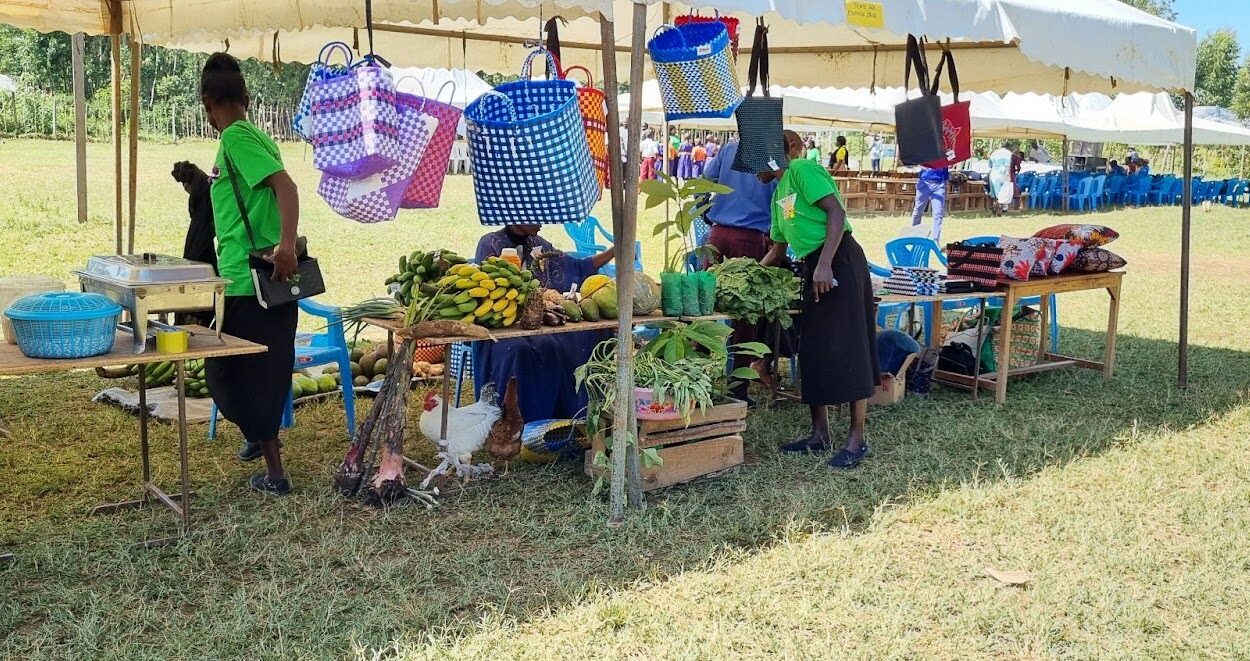
In the spirit of inclusion and spread of agroecological practices into the larger community, the SCOPE project has invited parents to participate. As a result, a group of mothers are now a part of the project. They take up the role of nurturing the gardens when the students are on holiday, and work together on community workdays at the school garden. The group expressed how the project has informed their decisions to set up gardens and practice agroecology at their homes, thanks to their children’s influence and knowledge from school. The women’s group has also started agroecological enterprises resulting from their involvement in this project, including selling of organic foods and fruits even at the school field day event.
Women’s group displaying their enterprises
Performance and art
Different schools in attendance skillfully prepared and presented skits, songs, narratives, and poems (in Swahili, English, and Dholu, the local language). A group of three judges awarded scores to the performing groups and individuals. The best-performing groups had prizes presented to their schools.
Some of the performance pieces included:
A young boy from Sega Township Primary School presented a poem entitled Agroecology. In his poem, he pointed out the principles of agroecology and permaculture which included farming without chemicals, without altering or destroying the soil structure, and taking care of micro and macro-organisms like earthworms.
The host, Ugolwe Primary School presented a piece on agroecological activities, encouraging people to practice them and emphasised the benefits of Indigenous foods to human health. Some of the benefits of Indigenous foods highlighted by the presenters included good immune systems to support the body away from lifestyle diseases, and physical strength needed by community members to perform activities in their farms and community.
Lolwe Primary School presented a piece on Agroecology from an African perspective. The main points from the piece highlighted the fact that agroecological knowledge has been passed down through generations from the ancestors. They emphasized the need for the preservation of such knowledge. The piece was delivered with great African proverbs and phrases such as, “Listen to the whispers of cassava leaves on the secrets of the soil.”
There was also a narrative shared by a boy and a girl comparing two types of head teachers in their school. One of the headteachers proposed and pushed for the setting up of a school garden on agroecological principles while the other pushed for chemical farming in the same farm. They named the pro-agroecology teacher Mr. Mapinduzi, translated as Mr. Revolution. The narrative went further to describe how the school ended up dividing the land into two and the teachers piloted their preferred systems. The agroecological farm had higher yields and attracted attention from the students and other school stakeholders.
“It was impressive to see the interest of school administrations and boards of management to be part of these kinds of projects and to be eager to involve their extended school communities. The involvement of students, as key players in the project, draws such positive promise for the future of agroecology as this aligns their choices and actions around food production to the right and the most effective methods that take care of the planet. The knowledge mastered and shared by young boys and girls through the different arts; songs, poems, narratives, dances, drama, was a clear indication that agroecology and especially the consumption of African Indigenous foods is key in the general health of humans and the planet. SCOPE Kenya’s role in reaching out to schools in the country to engage more students in learning and spread knowledge and skills, contributes largely to the need for change that the world needs at this critical moment. While many agroecology actors are focusing on change of policy and strategies on paper, it is encouraging to see actors like SCOPE Kenya working with schools and their communities in the practical implementation and support of agroecological activities with youth, the next generation of change-makers.” – Milka
About Milka Chepkorir
Milka Chepkorir is a young Indigenous woman from the Sengwer peoples in Cherang’any Hills, Kenya. For the last six years she has been working with her community to address land tenure issues in their ancestral lands, the Embobut and Kabolet forests. Due to lack of recognition of her community land rights, the community has faced human rights violations through evictions by the government of Kenya, all in the name of forest conservation. Milka has a special interest in gender issues and has been working with women and elders in her community to ensure women are included in the community land rights struggles. Together with the women in Embobut forest, she helped develop a cultural centre where the community hopes to carry out indigenous education classes to educate the youth and children about the Sengwer indigenous knowledge and systems, most of which have been lost or are diminishing. She is currently completing her Masters in Gender and Development Studies at the University of Nairobi. Her specific focus is on gender relations in community forest conservation among Indigenous Peoples. Milka coordinates the “Defending Territories of Life” stream of work at the ICCA Consortium. She was previously the Coordinator of Community Land Action NOW! (CLAN), a Kenyan movement of communities working to register their lands as community lands under the Community Land Act 2016.
Inisiatif Rizab Benih Komuniti (IRBK), which translates to “Community Seed Reserve Initiative”, is a seed-saving project of the Malaysian Food Security and Sovereignty Forum (FKMM), a discussion and action platform to strengthen food security and food sovereignty in Malaysia that is partially funded with support from Agroecology Fund. The primary goals of this seed initiative are to raise the visibility of farmers’ seed systems, to encourage the spirit and practice of saving, processing, sharing and exchanging seeds between farmers, to jointly care for and conserve agrobiodiversity, especially heritage or local seeds, and to jointly strengthen farmers rights.
In addition to our annual global and regional grantmaking programs, Agroecology Fund is honored to provide support for participatory action and learning to leading organizations and networks in their territories. While shifting funding toward agroecology is our primary mission, creating space for learning, facilitating research and collaborating across geographies is also central to our work. When presented with the opportunity to support multiple grantee partners to attend FKMM’s Agroecology Conference on Community Seed Systems 2024 (AECoSS24) in Bangi, Selangor, Malaysia, we were happy to contribute resources to enable further connection and collaboration within the network. The conference is part of the IRBK work that Agroecology Fund already supports.
We followed up with both FKMM and grantee partners CREATE Trust and Seed Savers Network to learn more about their experiences at the conference—what they learned and what messages they want to amplify about the importance of community seed systems. Read each of their responses in the following Q&As to learn more about these initiatives and the important work they’re doing within their respective communities to create sustainable, just, climate-resilient food systems and the value of gathering in person to collaborate, learn, and connect.
(The following answers have been edited for brevity and clarity)
Q & A with NurFitri Amir Muhammad, project leader of IRBK, FKMM
Please share a brief introduction about your collaborative work on seed systems.
Inisiatif Rizab Benih Komuniti (IRBK), which translates to “Community Seed Reserve Initiative”, is a seed-saving project of the Food Security and Sovereignty Forum (FKMM), a discussion and action platform to strengthen food security and food sovereignty in Malaysia. FKMM was established in 2018 to advocate for farmers’ rights and policy changes toward agrobiodiversity through natural farming, permaculture, and organic agriculture. FKMM conducts theoretical and practical workshops on farmers’ rights, community seed systems, and GMOs.
IRBK was launched in 2020 with the support of the Agroecology Fund to help create a seed inventory with rural seed guardians and offer an alternative to the formal (commercial) seed system. The formal seed system supports seed patents, which ultimately work against farmers and undermine agrobiodiversity. Our work to develop and maintain a seed reserve strengthens farmers’ rights and supports a more biodiverse, climate-resilient food system.
Why did FKMM decide to organize this Conference? What were some of the highlights that stood out?
On April 26, Inisiatif Rizab Benih Komuniti and FKMM co-organized an Agroecology Conference on Community Seed Systems 2024 (AECoSS24) in Bangi, Selangor, Malaysia, in conjunction with the annual International Seed Day. This event was created to be a platform where farmers from all over the world could convene to discuss strategic action focusing on food security and sovereignty, farmers’ rights, and seed rights. FKMM invited farmers and organizers from across Malaysia, many of whom are Agroecology Fund partners, including Serikat Petani Indonesia (Indonesia), Consumer Research Education Awareness Training and Empowerment (India), Seed Savers Network (Kenya), Nous Somme la Solution (Senegal), Rural Women Farmers Association of Ghana (Ghana, member of NSS), and MASIPAG (Philippines). A total of 200 individuals with more than 20 speakers representing 15 countries from Asia, Africa, Australia, and South America gathered for the event. The primary goal of the gathering was to bring together people from around the world to begin to illustrate the significance their practices hold for local and small-scale farming, the critical role they play in contributing to seed security for resource-constrained households, and for supporting biodiversity. The conference intends to build on its initial success to continue to raise awareness of the importance of community seed systems with an eye toward influencing government policies.
What were the key learnings you received from the gathering? How are you thinking about them in the context of your work?
Key Learnings:
Community and farmer seed systems promote partnerships and fairness through the co-creation of knowledge, citizen science, connectivity, and social and cultural values.
Community seed systems promote genetic conservation and create opportunities for economic diversification.
Gathering in person promotes learning and facilitates connections that empower communities.
These key learnings mirror what FKMM considers to be a crucial embodiment of agroecology and are essential for advancing a just transition toward a resilient food system—community, connection, and co-creation. We see the value of holding these types of conferences to bolster the strength and power of farmer collectives.
What message do you want to share about community seed systems and the role they play in food sovereignty?
FKMM believes that recognizing the interaction and complementarity between formal commercial seed systems and community seed systems can lead to a more inclusive and sustainable system. So we urge all stakeholders to recognize and protect farmers’ rights to seeds, which include the protection of traditional knowledge, equitable benefit sharing, and participation in decision-making. These socio-cultural components need to be recognized and protected by international agreements like the International Treaty on Plant Genetic Resources for Food and Agriculture and the United Nations Declaration on Rights of Peasants and other people working in rural areas (UNDROP). FKMM is committed to promoting the community system and advocating for farmers’ rights because we believe this is crucial for sustainable agriculture and food security.
Additional stories about FKMM’s work can be read here and here.
Please share a brief introduction about your collaborative work on seed systems.
CREATE Trust is working on the revival of traditional rice paddy varieties in Tamil Nadu and at the national level. The work focuses on three primary areas in building seed systems: mapping of native paddy seeds in different agroecological regions, conservation and experimentation, and exchange of seeds with farmers. We organize training and capacity-building programs on quality seed production to help maintain genetic purity. We strengthen the community seed system by organizing annual seed festivals and seed fairs to create awareness and showcase diversity. As of now, we have revived and conserved more than 200 traditional paddy varieties, and they are conserved at the community level by farmers at seed banks. These varieties are experimented with by farmers under diverse climate conditions and climate variations.
What were your primary reasons for wanting to attend the seed systems conference? What were some of the highlights from your time in Malaysia?
CREATE Trust was interested in attending the conference to begin to understand the global context of how community seed systems are working across the world. We learned about so many aspects of seed systems from this gathering, including new approaches and strategies for wider outreach, challenges and opportunities farmers face, civil society collaborative actions, contributions of other stakeholders, and what strengthening farmer capacities to become self-reliant looks like globally.
What were the key learnings you received from the gathering? How are you thinking about them in the context of your work?
From the presentations and interactions with participants, panelists, and the organizers, it quickly became clear that there are many similarities in the approach to building alternate seed systems with community participation. While CREATE Trust focuses only on paddy, many others who shared their stories at the gathering are building diverse crop seed systems. It was very useful to be connected to and learn from many seed savers with great experience and knowledge. A major highlight was meeting a university professor from Malaysia with whom I could exchange information about traditional paddy varieties. We’ve already started planning to widen our focus beyond paddy thanks to the influence and information from this gathering. In the coming years, we will focus on native millet and vegetables in our working area.
What message do you want to share about community seed systems and the role they play in food sovereignty?
Farmers across the globe never consider seed as a commodity. They consider seeds to be a community resource, and to nurture that tradition, they have historically had many cultural and ritual practices. Many of these practices have been neglected with the advent of the Green Revolution. In the context of genetically engineered seeds with patent laws and its threat to genetic pollution and negative effects on agrobiodiversity, it is important that the community seed systems need to be strengthened across the world. We can’t achieve food sovereignty without seed sovereignty. Beyond community, it is essential that we establish community seed savers and system networks at National and Regional levels.
Additional stories about CREATE Trust can be read here.
Please share a brief introduction about your collaborative work on seed systems.
Our work started 14 years ago as a response to restrictive seed sector laws in Kenya that prohibited farmers from sharing, exchanging, and selling seeds. Policies pushing farmers to adopt hybrid seeds and use chemical fertilizers and pesticides have increased food insecurity and pushed small-scale farmers deeper into poverty.
In response to this, SSN has forged both local and international partnerships creating a network of more than 3 900 farmers organizations in Kenya and attracted technical and financial support from international partners like Agroecology Fund. Our grassroots activities are aimed to achieve food and seed sovereignty.
What were your primary reasons for wanting to attend the seed systems conference? What were some of the highlights from your time in Malaysia?
I wanted to attend the seed systems conference in Malaysia because I knew there were possibilities of learning actionable models or techniques that could be useful in advancing the SSN agenda back in Kenya. The conference offered a platform to gain insights into successful seed systems from around the world, network with other advocates, and share our experiences. The level of diversity of the participants and topics for discussion also caught my attention. I took home implementation ideas shared by people, from farmers, researchers, and the private sector. That combination of diversity is rare in Kenya because most of the research is funded by the people who want to promote green revolution technologies. This conference created a unique learning opportunity rarely available.
What were the key learnings you received from the gathering? How are you thinking about them in the context of your work?
One of the key learnings I brought back from the conference was the use of microbial treatments for seed dressing. This technique offers a sustainable alternative to chemical treatments, enhancing seed health and reducing environmental impact. Another valuable method I learned was using paper and postcards for seed sharing, which can facilitate easier and more effective seed exchange among farmers. We are now considering how these techniques can be integrated into our existing practices to improve our seed systems. There is also a regulatory requirement to treat seeds with seed dressing chemicals for protection against pest insects and diseases. We have started conducting research on the practical implementation of microorganisms for seed dressing.
What message do you want to share about community seed systems and the role they play in food sovereignty?
Community seed systems play a crucial role in achieving food sovereignty. They empower farmers to maintain control over their seeds, preserve biodiversity, and ensure the resilience of local food systems. By supporting community-based seed systems, we can enhance food security, protect the environment, and promote sustainable agricultural practices. These systems enable farmers to save, share, and exchange seeds, fostering a sense of community and resilience against external pressures such as fluctuations in seed prices and climate change. Supporting these grassroots initiatives is essential for building a sustainable and equitable food system.
A photo essay on the Agroecology Fund Global Learning Exchange, 2020
By Rucha Chitnis
“From tackling hunger, poverty and inequality to responding to climate change to safeguarding biodiversity and expanding nutritional choice, agroecology echoes the goals of the 2030 Agenda,” states a recent FAO report. In fact, it is widely acknowledged that agroecological practices are key to achieving the Sustainable Development Goals.
In February this year, more than 100 participants from nearly 30 countries gathered together for a week-long global learning exchange on agroecology. These practitioners work at the intersection of policy, scientific research, grassroots movement building and natural farming practices. They were joined by 18 donors, a half-dozen advisors, and other agroecology allies. The exchange was hosted by the Agroecology Fund (AEF) in collaboration with Amrita Bhoomi, a farmer-centered agroecology training center in rural Karnataka which is part of the South Asia chapter of the Via Campesina.
AEF is a diverse group of US, European, and Asian funders that jointly makes grants to advance science, practices, and policies for agroecology. The Fund has awarded $6.8 million to 38 collaboratives across Africa, Asia, Europe, Latin America and the USA. “There’s never been a more important moment to invest in agroecology than right now. Agroecology is an innovative solution for the multiple crises we are facing right now, from climate change to food insecurity to the loss of biodiversity,” said Daniel Moss, the executive director of the Agroecology Fund.
Amrita Bhoomi in Karnataka, India
The learning exchange began with a site visit to Amrita Bhoomi in Karnataka, one of La Via Campesina’s agroecology schools in South Asia. Here, participants learned about agroecology as practiced in the Indian context — known popularly as Zero Budget Natural Farming (ZBNF) or Community Managed Natural Farming. The Amrita Bhoomi school trains smallholder dryland farmers in the region who are part of a vibrant state-wide peasant movement in Karnataka, and encourages their in-situ experimentation with agroecology in field plots.
Chukki Nanjundaswamy, coordinator of Amrita Bhoomi
“Agroecology is not just about natural farming techniques for farmers in Karnataka, but also about reclaiming rights over our seeds and our food systems. It’s the very transformation of our society,” said Chukki Nanjundaswamy, coordinator of Amrita Bhoomi. It is estimated that more than 100,000 farmers across the state now follow agroecological principles. In 2019, Chukki presented Amrita Bhoomi’s training model to the United Nations Development Program.
The preparation of Jivamrita
Farmers at Amrita Bhoomi demonstrated multiple practices of natural farming, including the preparation of jivamrita, a fermented microbial culture made from cow dung, cow urine and other organic materials, such as jaggery and flour made with pulses. At the learning exchange, participants learned that jivamrita, when applied to the soil, creates conditions for earthworms to thrive, building up the microbial activity in the soil and enhancing soil aeration and water retention.
Indigenous cattle are prized by natural farmers, as they produces waste rich in beneficial microbes.
Agroecology Fund Global Learning Exchange participants.
Through field visits and hands-on activities, agroecology trainers explained the principles of ZBNF. Participants learned about the five-layer model, in which the field is designed to mimic a forest. Trees, like coconut or mango, are planted alongside citrus fruits, bananas and nitrogen-fixing plants, like beans and pulses. This diversity of food crops ensures an abundant nutrition basket for farmer’s families and the market, as well as a steady income.
Ricardo Pacco Chipa
Ricardo Pacco Chipa is one of the stewards of the Potato Park in Cusco, Peru. He is a member of the International Network of Mountain Indigenous Peoples (INMIP). Together with other indigenous farmers, Ricardo conserves a staggering 1367 varieties of potatoes that are managed by six communities. INMIP is working across mountain ecosystems, especially in centers of crop origin, to protect biodiversity and indigenous peoples’ biocultural rights.
One of the key impact areas of agroecology is restoring dignity to smallholders, and reducing the inequity wrought by the industrial-agricultural complex. #StopKillingFarmers: Landless peasant advocates, Kathryn Manga of Kilusang Magbubukid ng Pilipinas and Sansen Ramos Maglinte of Sibol Ng Agham At Teknolohiya, shared their efforts to promote the rights of landless peasants in the Philippines, in the face of land grabs and brutal attacks. Nearly 250 farmers in the Philippines have been killed in a span of three years. Groups like these continue to persevere for genuine agrarian reform.
A delegation of farmers and activists from Mexico shared how free market policies have undermined smallholder farmers. Grassroots organizations have turned to alternative models, like agroecology to foster vibrant local economies. AEF partners in Latin America affiliated with La Via Campesina operate regional agroecology schools where in addition to studying agroecological practices, students learn the importance of advocating against seed laws that favor patented varieties, and thwart farmers’ free exchange of seeds.
Grantees from across five continents shared ideas about how to increase small producers’ direct access to markets and consumers. “How do we create a new market structure for food sovereignty as opposed to having markets imposed upon us?” said Rupert Dunn, a Welsh bread baker and wheat farmer, who is a member of the Landworkers Alliance and collaborator with the Center for Agroecology, Water and Resilience at Coventry University.
Participants spoke about the value of ancestral and traditional knowledge, as well as the power of co-creating new knowledge and innovation, by bringing together indigenous peoples, scientists and researchers. They asked donors to align their values and principles with indigenous peoples’ vision, values and principles.
Vijay Kumar
Vijay Kumar, Advisor to the Department of Agriculture at the Government of Andhra Pradesh, leads the project to amplify agroecology in drought-prone districts in the state. His vision is to scale Zero Budget Natural Farming (now called Community Managed Natural Farming) up and out, reaching six million farmers across Andhra Pradesh by the end of this decade. The program has garnered support from the state government, donor organizations and international banks such as the German overseas development bank, KfW.
Azim Premji Philanthropic Initiatives (APPI), an Indian donor organization, has granted $14 million (100 crores) to the Zero Budget Natural Farming initiative in Andhra Pradesh — specifically towards technical support and natural farming fellowships for youth. It is currently the largest private grant to support agroecology worldwide. “We saw an agrarian crisis and recognized that small and marginal farmers were vulnerable. We partnered with the government of Andhra Pradesh, which has shown a deep commitment to ensuring farmers are self-reliant,” said Tasqeen Macchiwalla, General Manager at APPI.
Still, agroecology receives a fraction of the financing that goes towards industrial agriculture. “It’s shocking that despite what we know about the benefits of agroecological farming solutions, globally less than 5% of public research dollars go to explore how we can promote these practices. In the absence of that public funding, there is a need for philanthropy to come in and support innovative research around the world,” said author and educator Anna Lappé, an advisor to the Panta Rhea Foundation.
A paradigm shift in the funding world is urgent, and might well be underway. Emile Frison, a member of the International Panel of Experts on Sustainable Food Systems (IPES-Food), observes a rise in investments in agroecology from governments and bilateral and multilateral donor agencies. “The German parliament has instructed their Ministry of ForeignAaffairs to invest in agroecology and be an advocate for investments in agroecology. France has had agroecology on their agenda for a long time, and they have invested in West Africa,” he shared.
Both donors and grassroots networks working across the value chain are increasingly interested in blended financing, through which grants are paired with low-interest loans to support emerging agroecological enterprises. Several partner organizations that have income-generating businesses, such as CEDAC and Bionatur from Brazil, are ready to put this capital to work right away.
Professor Michel Pimbert, Executive Director of the Center for Agroecology, Water and Resilience at Coventry University, believes that agroecology is a counter-narrative to conventional industrial farming. Agroecology, he emphasized, focuses on equity and sustainability, where “circular farming systems mimic natural ecosystems” and reduces the dependence of small farmers on fossil fuels and other external inputs.
AEF shared its strategic plan with partners and asked for suggestions to inform the Fund’s next five-year plan. Partners reiterated how important it is for AEF and others in the donor community to listen and respond to the expressed needs of the agroecology movement.
Participants emphasized just how important it is to communicate evidence and successes to wider audiences. Million Belay, Coordinator of the Alliance for Food Sovereignty in Africa, shared how AFSA has documented local impacts in partnership with the Oakland Institute (also an AEF grantee). They published 33 case studies of agroecological practices across the continent and produced ‘Know Agroecology’, a media guide for journalists and communicators in the continent.
During group sessions and panel discussions, grantees spoke to the importance of sharing evidence-based agroecology solutions that grow out of the experiences of local communities. The evidence can be used to train youth and engage decision makers.
“Agroecology is a collective resistance against climate change and is the people’s alternative to agribusiness,” said Kavitha Kuruganti of ASHA (Alliance for Sustainable and Holistic Agriculture), a pan-Indian network of nearly 400 diverse groups that advocates for the wellbeing of small and landless farmers, and access to healthy, locally-produced food. The Indian experience illustrates that with favorable public policies, government support and strong grassroots organizing, agroecology can be adopted rapidly across rural communities.
As Kavitha Kuruganti and Vijay Kumar pointed out, scaling agroecology up and out will need more than state support and enhanced financial flows. Social and community mobilization is also key. One of the building blocks of the ZBNF model was the participation of women’s self-help groups in Andhra Pradesh, which has helped it spread to more than half a million farmers across the state.
“Women play key roles in agroecology. They are the knowledge holders who work everyday [on farms]. [To be successful], we must also engage young people in a model that is focused on healthy food, community relationships and local consumption,” said Mariama Sonko, a Senagalese rice farmer. Mariama runs a business to create bouillon broth from local foods, and is the national coordinator of ‘We are the Solution,’ a pan-African campaign led by rural women to preserve traditional farming practices and promote food sovereignty. As part of this campaign, women farmers are also researching local rice varieties for reintroduction into markets.
Maribel López, a farmer and organizer withCentro de Desarrollo Integral (Center for Integral Development of Mixteco Farmers), spoke about how the climate crisis impacts farming communities: “Climate change is urgent. We don’t get enough rain. We are working on preserving native seeds and conserving our soil. We are also trying to diversify our crops to have more food for our families. Agroecology helps make the land productive without hurting her,” she said.
“I dream of a world of agroecology. A world without toxic chemicals and death…I fight for agroecology for my daughter and future generations. I believe we can take agroecology to formal education so that it can be studied and transformed into concrete science,” said Lidiane Gregorio, a farmer from Brazil and a member of Bionatur Seed Network. The Bionatur cooperative supports seed-producing families to gain access to new markets.
According to ETC Group, three companies control more than half of the global commercial market for seed, with Monsanto controlling more than a quarter of this share. “It is important for us to remember that at the heart of agroecology is diversity. And diversity is our best defence in the future. It’s about remembering our right relationship with the land that made us part of the incredible biodiversity on our planet,” said Gopal Dayaneni, Program Officer at ETC Group.
“Rutendo Zendah, a research and advocacy officer at the African Center for Biodiversity, (ACB) works to strengthen biosafety laws and policies to stop the influx of genetically modified organisms in South Africa and beyond. “Our organization is resisting and opposing the corporate expansion of Africa’s agriculture systems. Agroecology has revived the connection of farmers to the land and water. As a young African woman, I am glad to be a part of the change that is coming,” she said.
Access to healthy and nutritious food remains a luxury for many. According to the Food and Agriculture Organization, nearly 820 million people don’t have enough to eat. Patricia Flores, a member of the International Federation of Organic Agriculture Movements, spoke about the power of agroecology to mitigate hunger and improve nutrition in low-income communities. Flores is part of a collaborative working in mountain ecosystems in Asia, Africa and Latin America. In her region, Peru, agroecological interventions have improved the diets of 30-40% of low-income communities in high-altitude regions.
Indira Raimberdieva, Director of the Peace Building Center in Kyrgyzstan, stressed the importance of preserving the unique culture of nomadic communities and their pastoralist practices in Central Asia. “We partnered with the Baikal Buryat Center for Indigenous Cultures and started a project to revive the indigenous Buryat cow, a breed that was central to the steppe pastoralism in Buryatia. Now, they are focused on restoring populations of the Kyrgyz horse, another indigenous livestock breed that has been pushed to the brink of extinction by decades of neglect. Their work is based on a “spiritually-oriented worldview and traditional knowledge.”
Participants left the Learning Exchange inspired and energized; eager to continue strengthening the connections they made. “I learnt a lot and I was really impressed by the amazing energy and knowledge of the participants. I believe we have a lot to learn from each other,” said Cristina Agrillo, policy officer at Slow Food Italy.
“Agroecology offers a tremendous and urgent opportunity right now for funders. There’s so much vibrancy and creativity in the movements on the ground – women, farmers, indigenous peoples, researchers and scientists – all working to deepen the impact of agroecology around the world,” said Daniel Moss, Executive Director of AEF.
Rucha Chitnis is a photojournalist, writer and an emerging filmmaker. Her work elevates a narrative of hope and resilience in the face of an ethnocentric lens that often erases and dehumanizes communities of color. She is a fellow at the International Women’s Media Foundation. You can read her stories here.
It was inspiring to participate in the learning exchange hosted by the Agroecology Fund and Alliance for Food Sovereignty in Africa. I appreciated the perspective endorsed by the participants that amplifying agroecology requires context-specific support to enable small scale farmers to adapt specific practices that will lead to a progressive transition to a productive, resilient, sustainable and nutrition-sensitive farming system.
To amplify this process requires support for agroecology as a science and a grassroots social movement. In most countries, there is an urgent need for more conducive policies and programs.
There were not many participants from the French-speaking Sahel region of Africa at the learning exchange, and I thought I would share our ground realities and the challenges we face to promote agroecology. Small scale, dry land farmers in the Sahel are facing a chronic food and nutrition security crisis.
This is caused by declining soil fertility, degradation of land, loss of tree and vegetative cover, and climate change. In addition to increasingly frequent drought and erratic rainfall, the Sahel is a region that climatologists say is going to be most affected by increased temperatures of up to four degrees Celsius by 2050.
If current millet and sorghum cropping systems do not change, sun and heat will reduce average yields from 15 to 40%.
Photo: Farmers from Bilanga, Gayéri and Tibga carefully listening to Michel Zorome during a FMNR demonstration in Yako
One of the key innovations farmers are adapting to cope with this is Farmer-Managed Natural Regeneration of Trees (FMNR). This is a form of agroforestry that builds on traditional methods. Through innovative ways of managing trees on crop lands (a simultaneous fallow), farmers can sustainably improve soil fertility, and reduce the effects of high temperatures through dispersed shade.
FMNR is only one of several innovative agroecological practices that are part of a transition process that gradually transforms local farming systems. Others include variede soil and water conservation measures, effective use of crop residues, and improved methods of composting.
There is already evidence of how these agroecological practices work.
The challenge for amplifying agroecology lies in strengthening social movements, changing current agribusiness-oriented agricultural policies, and re-orienting agricultural research and education to create a vastly more enabling environment. Without this, and innovative strategies for quick horizontal scaling of successful experiences in agroecology, the crisis will get worse.
The two main opportunities or windows for influencing or changing policies are the current government priorities for building resilience and adaptation to climate change. I hope our experience in the Sahel can contribute to this learning and exchange site. However, we are also counting on the support of the Agroecology Fund, AFSA and participants to help us in the Sahel overcome our growing critical food and nutrition crisis.
Our use of the word “crisis” is not an exaggeration. Every year in the Sahel, good rains or not, there are over 20 million people, (mostly dry land farmers), who are food insecure. Many depend on humanitarian aid to survive. More seriously, over 35% of all children in the Sahel suffer from irreversible physical and cognitive damage because of chronic malnutrition.
Agroecology, in all three of its dimensions—as a practice, science and movement—is a critically important part of the solution to resolve this crisis in the Sahel.
Peter Gubbels, Groundswell West Africa collaborative partners.