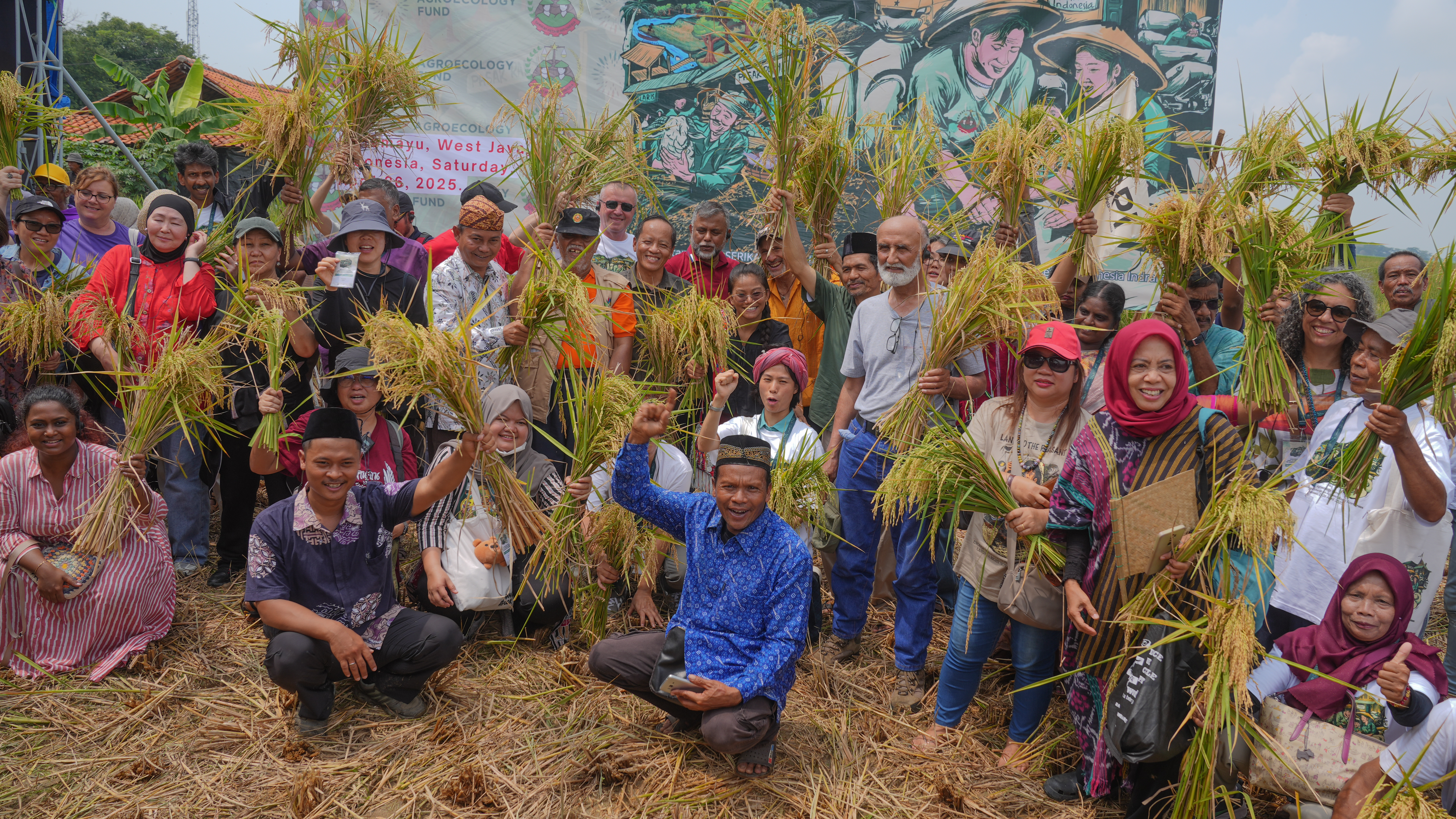
On our way to the paddy fields, the half dozen buses of agroecology practitioners and advocates visiting from 25 Asian countries nearly became mired in the mud. The puddled road was lined with trees, hedges of vegetable vines, and a wide irrigation canal. It was a journey to Indramayu’s Food Sovereignty Area (FSA), a former sugar cane plantation converted into a cooperative of rice producers. It was green to the horizon, the realization of years of Indonesian peasants’ perseverance and struggle.
As the participants in the Agroecology Fund’s Asia Learning Exchange on Agroecology Economies arrived for a symbolic rice harvest in Sukamulya village, cooperative members and villagers offered a warm welcome – fresh coconut, banana, and mango as well as traditional dances. Despite language barriers, the atmosphere exuded trust, affection, and a shared respect for safe, fairly grown, nourishing food.
Before the visitors from across Asia’s diverse agroecology movements took a scythe to the rice stalks and delivered them to the event stage, local farmers, SPI leaders, and local government representatives shared their experiences and culture. Not only had they preserved their agrarian traditions, but their folk culture as well. Children and adults danced in costume.
The president of SPI, Henry Saragih, described SPI’s organizational structure at the national, provincial and district levels. SPI cooperatives are separate legal entities to manage their economic activity. The land, he emphasized, is a fundamental right of people to sustain their lives. The government must administer land rights fairly. To achieve food sovereignty in Indonesia, Saragih said, agrarian reform and a nature-friendly, agroecological farm economy are essential.
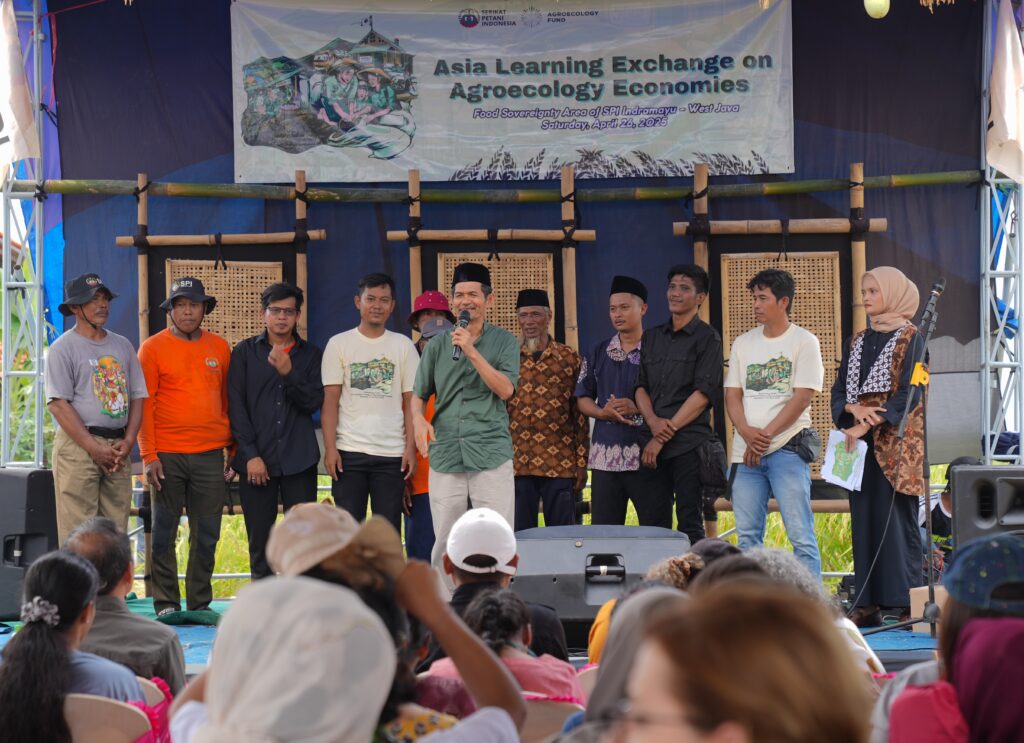
Lim Nurahum, Representative of the Regent of Indramayu and the Sukamulya Village Community Empowerment Officer, described Indramayu as the key rice production center of Indonesia with a total paddy area of 125,442 ha. (For a comparison, the total area of Indramayu Regency is approximately 209,942 ha, roughly 24.4% of the total land area of this West Java province1). The area hosts 150,359 peasant families. In 2023, Indramayu’s rice consumption was 242,000 tons, and the surplus was 635,000 tons. It contributes 5% of the national supply needs and 15% of the needs of West Java.
From a stage adorned with banners and rice stalks, young farmers from the region shared their agroecological farming experiences. Benny, a farmer from the region, said that use of natural fertilizer has lowered his production costs. Earlier, when he had purchased fertilizer from the market, his cost was about 15 million Indonesia rupiah per hectare. With natural fertilizer, he gets 8 tons of paddy per hectare per harvest – two crops/year – and his production cost has come down to 5-6 million Indonesia rupiah per hectare without lowering yield. A third crop, sown during the dry season, is a variety of vegetables and fruits. Rotation and intercropping prevent weed growth and improve soil fertility.
Visitors from across Asia were curious about the organic composition of the soil and the yield comparison between agroecology farming and industrial farming. Zulfikar, a farmer and Secretary of SPI, Indramayu, shared that when they practiced industrial farming, their soil pH was 4-5. After they adopted agroecology, their soil pH improved to 6-7. By the third year, their yield equaled that of industrial farming and in some cases was even better.
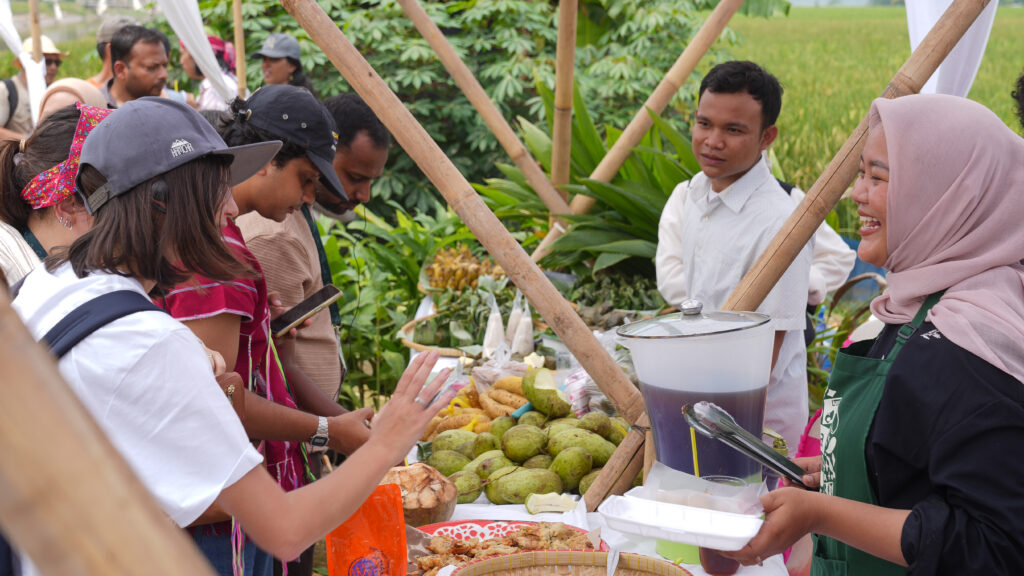
For the Learning Exchange participants, the interactions with the cooperative members of the Food Sovereignty zone were a moment of reflection and resolve. Nantawan Manprasong from The Field Alliance’s “Agroecology for Safe School Lunch” in Thailand and Vietnam, put it this way: “The Food Sovereignty Area (FSA) has deepened our understanding of the power of collective action, rooted in solidarity and shared values, to drive change. Seeing local farmers take ownership of their knowledge and methods and collaborate within their communities showcased the strength of grassroots leadership. The active involvement of young farmers and youth leadership, supported by the local government, presents a model adaptable to my own region.”
Speaking on the occasion, Angela Cordeiro, the Agroecology Fund’s co-director, expressed her admiration for the achievements of Indonesia’s agroecology and food sovereignty movement. She said: “We had heard about your struggles for food sovereignty, and today we feel its energy in your fields. We learn from you in order to better farmers’ lives across the world.”
As the day came to an end, the farming community managing Indramayu’s Food Sovereignty Area gave us a warm meal and send-off with wicker baskets of rice, a bottle of locally manufactured bio-fertilizer, and a cotton stole – symbols of Indonesia’s struggles, culture, and achievements. The field trips during AEF Asia Learning Exchange 2025 sealed our impressions of what our agriculture most achingly needs: healthy food grown from just soil.
- Monitoring Urban Expansion and Loss of Agriculture on the North Coast of West Java Province, Indonesia, Using Google Earth Engine and Intensity Analysis; Table 1. Viewed on May 6, 2025. ↩︎