Unlike extractive food systems, agroecology puts regeneration at the center, and by doing so promotes a circular economy rooted in solidarity. This economy “recognizes human vulnerability and fosters community agreements based on cooperation,” emphasized Dr. Eduardo Enrique Aguilar Hernández, from the University of Monterrey, Mexico, during the webinar Agroecological Entrepreneurship through the Lens of the Solidarity Economy.
The Agroecology Fund (AEF) organized this event to explore how agroecology and a solidarity economy reinforce one another, featuring first-hand accounts from four grassroots organizations in Asia, Africa and Latin America. Speakers highlighted how agroecological entrepreneurship –that applies agroecology principles across value chains– builds solidarity economies worldwide.

One initiative is led by the Kenyan Peasant League (KPL), which started as a response to the COVID-19 pandemic. It brings together smallholder food producers in food cooperatives (coops), strengthening both climate resilience and economic justice.
Catherine Banda, KPL’s Financial Officer, described the food coops’ working areas including: indigenous seeds and foods, organic agricultural inputs, and local market strengthening and access. To monitor supply and demand, they gather and analyze data. To facilitate direct access to healthy food without intermediaries, they promote weekly community markets. And as a scaling strategy, they plan to open supermarkets, food banks and online stores.
KPL has also created a “solidarity work points” system (258 created up to date), through which cooperative members offer their work in agricultural or logistical tasks and, in doing so, earn “points” that they can then redeem for food. This model, said Banda, encourages inclusion and reciprocity.
Thriving in Challenging Environments
Aguilar explained that people facing shared challenges like climate change build reciprocal systems, which can form the basis of a solidarity economy.

One such example is the model of community enterprises on Bangladesh’s floodplains, which treat dynamic and vulnerable ecosystems as common property fish farming zones during the high water monsoon season. “After harvest, they revert them to individual farmers for cropping,” said Sakiul Milat from the Education, Health and Development Program, SHISUK.
This model’s impact is remarkable, with the productivity of fish in the aquaculture pools and flood plain management ranging from 100 kg to 4 tons per hectare. Farmers reduce agrochemical use during cropping season by enriching the soil with fish waste. This practice enhances aquifer recharge and supports climate adaptation.
The community-based approach to entrepreneurship ensures equity and participation through shared resource management. Its members design and follow clear rules, make joint decisions, share investments, and retain profits within the group. Local jobs and community control over markets increases.
Yet, one major barrier remains: Bangladesh lacks a legal framework to support rural collective enterprises. Without legal recognition, projects struggle to grow and replicate, as well as to secure funding, partnerships and long-term sustainability, Sakiul added.
The next goal for SHISUK members is to expand to new areas, such as beekeeping or home gardens, and to create a training center for agroecology and community enterprises.
Action Must Be Collective
For Aguilar, agroecology can fortify solidarity and localization, underscoring life, dignity and social justice as central axes.

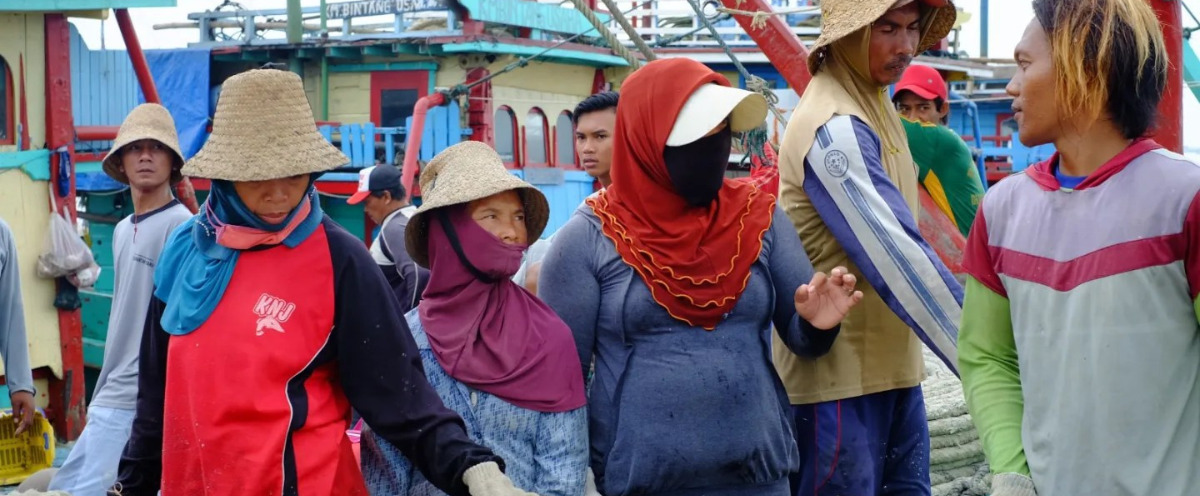
From this point of view, the cooperatives of fisherwomen that the People’s Coalition for Fisheries Justice (KIARA) supports in Indonesia are a great example. Currently, fisherwomen contribute up to 48% of the family income and their working day lasts an average of 17 hours daily. KIARA advocates for their members’ labor rights. The State and fisheries policies recognize only men as actors in this sector, explained Susan Herawati.
Thanks to KIARA’s assistance, the women cooperative members have been able to access and manage their territories’ marine resources autonomously, have reduced their dependence on intermediaries, have created sources of income and continue to fight against economic violence against women.
The local economy that these fisherwomen boost is inclusive and linked to ecological restoration, as they organize beach clean-up days and promote the recovery of degraded areas in which they plant mangroves grown in community nurseries.
Some of these cooperatives now transform undervalued local fish into higher value-added products, such as biscuits. According to Herawati, these innovations, in addition to improving the income of fisherwomen, strengthen their self-esteem and community recognition.
Of course, they still face threats such as ocean grabbing by tourism and mining companies, the expansion of aquaculture and criminalization for defending their territories. But they persist in cooperative efforts as both an economic strategy and a transformative political action.
Beyond Barter
Geovanna Lasso, Carlos Rodríguez and Isabel Armijos, from the Colectivo Ecológico del Ecuador, presented the experience of “La Chala”, a physical and symbolic space for food sovereignty that arose to respond to marketing problems in the Andean Choco.
According to Rodríguez, “La Chala”, in addition to supporting the fair and direct marketing of agroecological products from producer families, aspires to awaken consumer appreciation for the local food on their table. To this end, the collective is training producer families in communication skills to demonstrate their agricultural practices. The space is more than a store: “it encourages dialogue, social marketing and respect for local peasant culture.”
La Chala, the collective said, is possible thanks to teamwork carried out with the Choco Andino Youth Network and the Association of Artisanal Producers of Agroecological Cocoa of Puerto Quito; also supported by AEF. Its next step is to open additional points of sale in urban Quito to expand fair trade.
Deepening Investments
All the experiences share a common thread: agroecology as a path towards a solidarity economy and a solidarity economy as a path towards agroecology. What is lacking is sustained investment along fair terms and policy support. There are hopeful signs that change is afoot. Increasingly a growing community of donors and investors, the Agroecology Fund among them, are supporting these and other initiatives that, from their territories, are laying the groundwork for a very different economy.
Lucy Calderón is a science and environmental journalist based in Guatemala City, founder of EcocienciaGT, and a former ICFJ fellow.