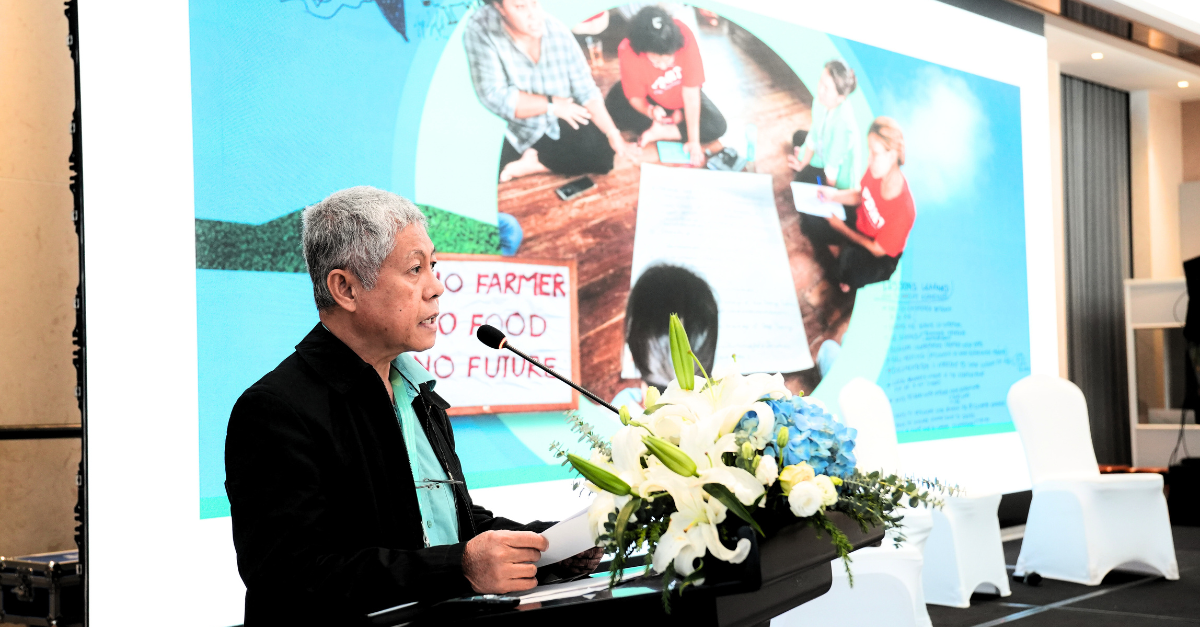
“Humanity is at a crossroads as we all confront extreme weather events and the slow onset of climate change. There is an urgent need to transition toward agroecology and regenerative agriculture, as ecological systems approach critical tipping points. Despite agroecology providing evidence-based data that it can not only help cool the planet by reducing emissions and capturing carbon but also contribute to communities becoming resilient, much of the funding in agriculture is still directed towards corporate and profit-driven agriculture.”
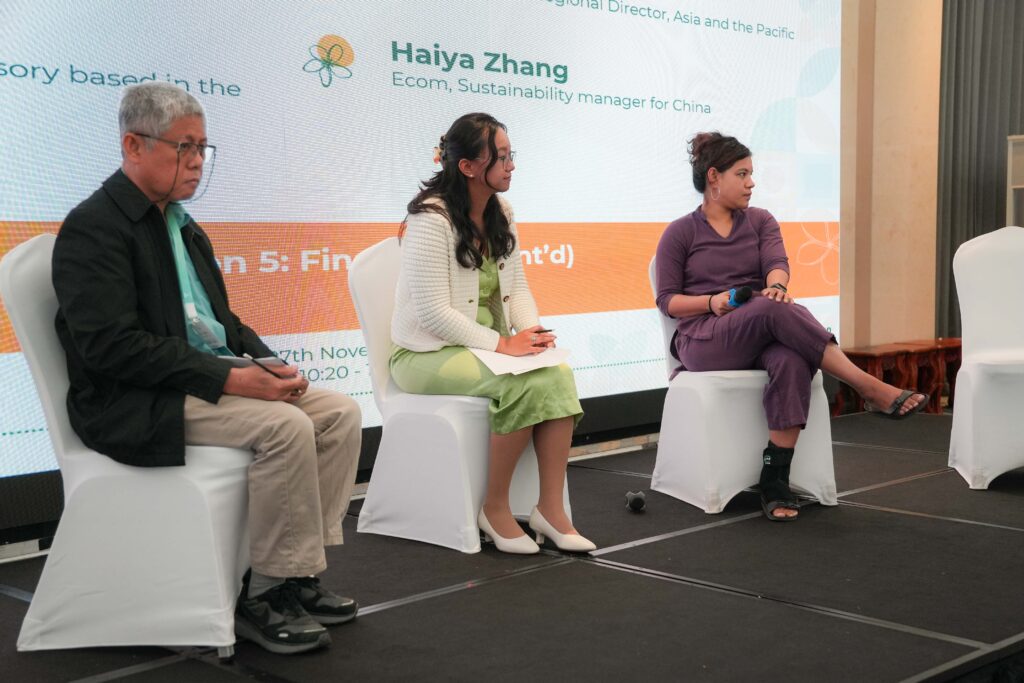
This was my intervention as one of the panelists in the discussion on Financing Agroecology in the Transitioning Towards Agroecology and Regenerative Agriculture (TARASA) Conference, held in Vientiane, Lao PDR, from November 23-29, 2025, where I was representing the Agroecology Fund (AEF).
While most of the speakers offered profound and contextual presentations about their experiences in agroecology, what remained most vivid in my mind were the presentations of youth agroecology practitioners. Rather than pursuing careers in urban centers, they returned to their family farms to create livelihoods in their communities through agroecology. What they have undertaken is proof that agroecology has the potential to reverse the global trend of rural-to-urban migration and address the challenge of aging farming population, both consequences of the limitations of conventional agricultural models.
Advancing the ASEAN Guidelines for Agroecology Transition
A major highlight of the conference was the discussion on the Association of Southeast Asian Nations (ASEAN) Guidelines for Agroecology Transition. These guidelines represent an important regional effort by the ASEAN to support its member states in transforming food systems toward sustainability, resilience and equity.
The framework emphasizes 7 key transition leverage points:
First, enabling policy and governance. Governments are encouraged to create coherent national strategies that support agroecological transition through legislation, incentives and institutional coordination.
Second, farmer-centered knowledge systems. Agroecology recognizes farmers not just as recipients, but as innovators and co-creators of technologies and solutions where traditional knowledge, participatory research and community-led experimentation play a central role.
Third, capacity building and knowledge sharing. This included establishing platforms such as digital media hub to exchange best practices and lessons learned.
Fourth, research and innovation. Developing systemic research agendas canstrengthen the scientific credibility and visibility of local agroecological practices.
Fifth, multi-stakeholder engagement. This involves fostering collaboration among governments, civil society groups and private sector.
Sixth, creating sustainable value chains. Intervening across the value chain can promote safe, diverse and nutritious food while ensuring fair returns for products.
Seventh, financing solutions. This includes designing financial instruments and risk-mitigation strategies tailored tofarmers transitioning toward agroecological systems.
Equally valuable were the conversations outside the formal sessions, over Lao coffee, shared meals featuring a fusion of Eastern and Western cuisines, and evening walks along the Mekong night market. These moments reinforced the sense of regional solidarity. Agroecology is not simply a technical shift in farming practices; it is a social movement grounded in culture, cooperation and shared responsibility.
It is incumbent upon us at the AEF to study the guidelines and identify areas of alignment with our own work. As we deepen our engagement, this should include our partner grantees in the region in the implementation, future development and evolution of these guidelines for Agroecology transition. This is particularly relevant and timely as AEF prepares for its Strategic Planning process in Mexico.
AEF supports the conclusions that emerged from this conference.
TARASA25 was a regional, multi-stakeholder conference held in Vientiane, Lao PDR, from 25–27 November 2025 that convened researchers, farmers, policymakers, youth leaders, civil society, and private-sector actors from across Asia-Pacific to advance agroecology and regenerative agriculture through knowledge exchange, policy dialogue, financing discussions, and collaboration, strengthening collective action toward resilient, equitable, and sustainable food systems, with support from governments and partners including the Food and Agriculture Organization of the United Nations.
Cristino C. Panerio is advisor to the Agroecology Fund, an Agricultural Engineer, Chairman of the Board of MASAI Inc. in the Philippines, and long-time advocate of people-led development and agroecology through his work with MASIPAG’s Asian Peoples’ Exchange Program (APEX) in partnership with PANAP and Misereor.