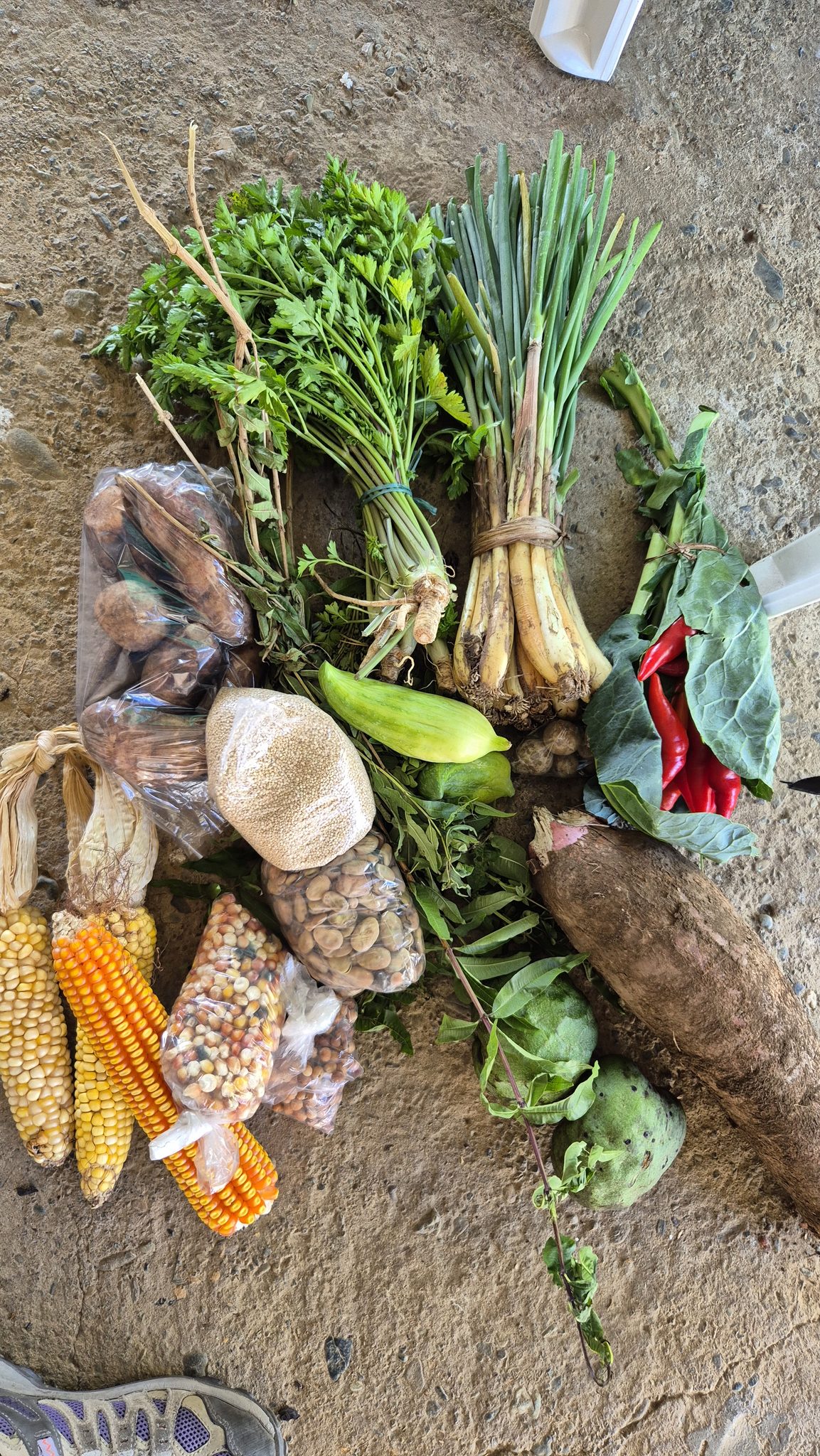
In Colombia, peasant communities, Indigenous Peoples, and Afro-descendant communities are protecting ancestral seeds, recovering territorial knowledge, and demonstrating through participatory research that agroecology is a tool for addressing the climate crisis from the ground up.
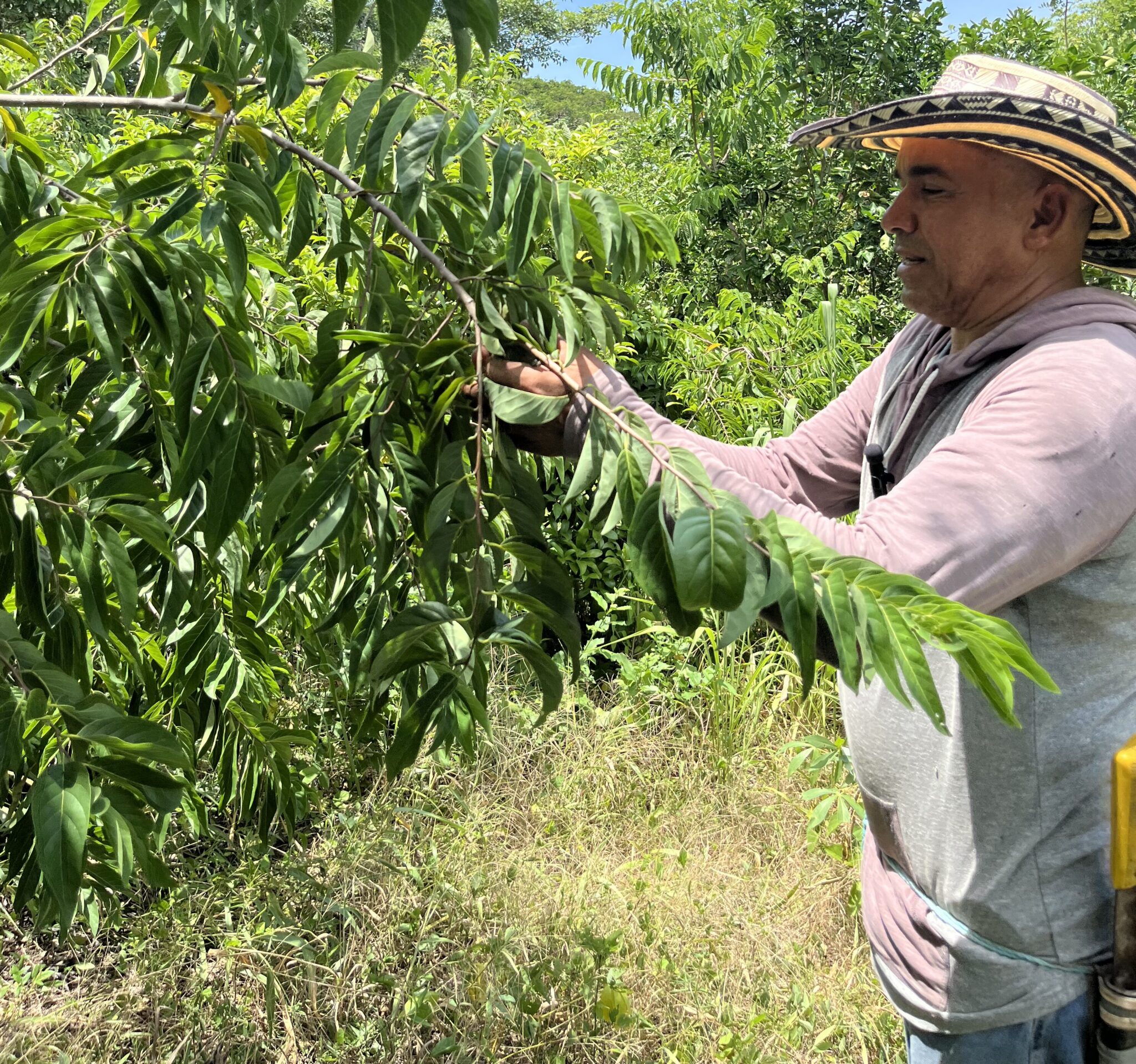
“Climate change is something we have caused… It rains when it isn’t needed, and when rain is needed, it doesn’t come,” explains Roberto Barbosa, a seed custodian at the Community Seed House (Casa Comunitaria de Semillas, CCS) in Los Palmitos, Sucre, in plain terms.
Seed custodians carefully track climate instability. According to Roberto, it no longer rains as much in Sucre in March and April as it used to, while unexpected rainfall now occurs toward the end of the year, traditionally the dry season.
“Now we have to take risks… We see two or three consecutive rainy days and plant our crops; often, the rain stops, and we lose everything, as we did this year,” he says.
Roberto constantly monitors his crops, manages pests sustainably, and maintains healthy soil and water conditions. These agroecological practices ensure a steady supply and are essential to preserving the extensive collection of seeds stored in airtight jars on the shelves of his community’s seed house. Each seed represents years of selection, experimentation, and ancestral knowledge.
According to the Red de Semillas Libres de Colombia (Colombian Network of Free Seeds, RSLC), being a seed custodian means “sustaining a web of forests, water, and community in the face of an uncertain climate.” In other words, seed custodians put agroecological practices into action.
Roberto’s experience reflects just some of the challenges faced by rural families across Colombia. The loss of native and traditional seed varieties, the spread of commercial and genetically modified seeds, and youth migration threaten both biodiversity and the continuity of traditional knowledge.
According to data cited in a 2024 report by Colombia’s National Planning Department, 63.5% of rural agricultural producers are small-scale farmers, who face limited access to land and infrastructure. Also, based on data from the National Administrative Department of Statistics (DANE, May 2025), 25.5% of households experienced moderate or severe food insecurity in 2024. In rural dispersed areas and population centers, this figure rose to 34.2%, highlighting persistent territorial inequalities.
Five Research Initiatives, One Goal: Influencing Public Policies That Promote Agroecology
In response to these realities, five national organizations and networks— RSLC, Movimiento Agroecológico para Latinoamérica y el Caribe (the Agroecological Movement of Latin America and the Caribbean, MAELA), Red Nacional de Agricultura Familiar (the National Network for Family Farming, RENAF), Movimiento Agroecológico Colombiano (the Colombian Agroecological Movement, MACO), and the Grupo Semillas Corporation—have joined forces through a participatory action research (PAR) initiative supported by the Agroecology Fund since 2024. Working on several fronts, the initiative seeks to advance and strengthen policy advocacy efforts that position agroecology as a solution to Colombia’s climate crisis.
To this end, the organizations are conducting research on climate-resilient seeds, Participatory Guarantee Systems (PGS), the mapping of agroecological initiatives, and methodologies for developing sub-national agroecology plans. A communications strategy complements these efforts using various formats and with the active participation of young people and women reporters from local communities.
The initiative addresses a persistent gap: although Colombia has made progress in the institutional recognition of agroecology, its implementation remains uneven across regions.
For MAELA, the challenge is also political. The movement warns that the State tends to reduce agroecology to “good agricultural practices” or “green markets,” when it is actually a political and territorial project that introduces truly climate-resilient food systems. Grassroots pressure is fundamental.
Afro-Descendant and Pijao Communities: Food and Territorial Defense
Examples of this interconnected approach to territorial governance and food sovereignty can be found in traditional Afro-descendant farms in the tropical dry forest of northern Cauca and in a Pijao Indigenous garden in southern Tolima. Through their work with Grupo Semillas, 64 families—30 Afro-descendant and 34 Indigenous—shared their experiences.
The assessment found that small farms preserve the greatest diversity of traditional seeds and that fruit trees are the most effective economic strategy during periods of drought.
These spaces bring together food production, culture, and territorial defense. However, families also face obstacles that threaten their future: communities have little influence over decisions concerning water and biodiversity, while many young people migrate because, as the research notes, they “see no future in the countryside.”
Native Seeds: Knowledge That Helps Address Climate Change
Seeds remain at the heart of agroecology. The research by the Red de Semillas Libres de Colombia (Colombian Network of Free Seeds, RSLC) collected testimonies such as Roberto’s and documented how changing rainfall patterns affect the production, conservation, and exchange of native seeds in communities in Sucre and Cauca. At the same time, testimonies from seed custodians helped identify crops that show greater resilience under these conditions: cassava, cacha beans, negrito corn, parda potatoes, and diamante yams.
These findings highlight the value of peasant knowledge and the knowledge held by Nasa and Misak Indigenous communities in identifying crop varieties adapted to local conditions. They also reinforce the role of Community Seed Houses as collective spaces for conserving biodiversity and providing support networks during emergencies.
For this reason, the RSLC has proposed recognizing these seed houses as climate infrastructure in climate change adaptation and disaster risk management plans. The proposal seeks to ensure that public policies recognize not only the seeds themselves but also the people and community structures that enable their conservation.
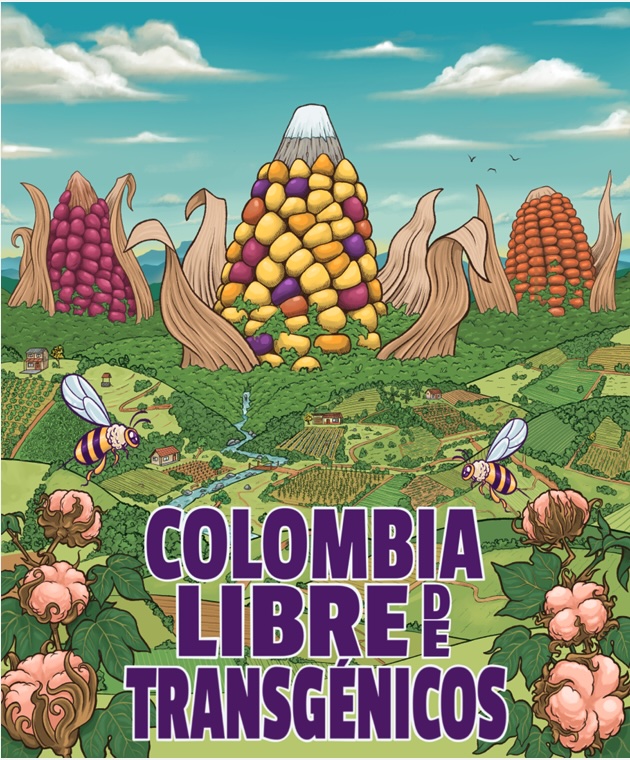
Designer: @ociosoandariego
Protecting Seeds
The protection of this agrobiodiversity is also threatened by genetic contamination. In 2025, tests conducted in four regions of Colombia by the Alliance for Agrobiodiversity and Grupo Semillas analyzed 42 samples of traditional and commercial corn. Twelve tested positive for genetically modified events, equivalent to 28.6%.
This finding reinforces the need for protective measures and monitoring. Since 2023, Constitutional Court Ruling T-247 has required the establishment of mechanisms to prevent genetic contamination of traditional corn in Indigenous territories and the development of participatory measures to protect native seeds.
The organizations support the implementation of this ruling through seed inventories, community exchanges, training, and institutional coordination. Meanwhile, the Colombia Free of GMOs campaign (Colombia Libre de Transgénicos) seeks to broaden public debate about the risks to biodiversity and the rights of communities that conserve these varieties.
From Community Knowledge to Public Policy
The participation of peasant and Indigenous social organizations has also helped open institutional spaces for agroecology. Their coordinated efforts contributed to the development and approval of the National Public Policy on Agroecology, adopted through Resolution 331 in November 2024. In addition, organizations affiliated with MACO secured eight of the nine seats allocated to national platforms on the National Agroecology Roundtable.
At the territorial level, this collaboration contributed to the development and approval of departmental agroecology plans in Antioquia, Valle del Cauca, and Nariño. Experiences documented by MAELA informed the development of a methodological roadmap that captures lessons learned and challenges encountered throughout these processes.
Fair Market Access for Peasant, Family, Ethnic, and Community Agriculture
For the five organizations involved in the research, one thing is clear: the agroecology practiced by local communities, Indigenous Peoples, and Afro-descendant communities helps safeguard biodiversity, social ties, and food sovereignty.
But how can these practices become economically viable? How can the quality and origin of these foods be guaranteed without relying on costly and exclusionary third-party certification systems? And how can agroecological production be scaled up so that more people can access these foods at competitive prices in local markets and supermarkets?
For public policies on agroecology to translate into concrete opportunities, family farming must also have better access to markets. RENAF’s research on Participatory Guarantee Systems (PGS) generated recommendations for strengthening these systems at local fairs, through public procurement and institutional markets, and in supermarkets, while preserving PGS’ fundamental characteristics as a low-cost method to promote farmer learning and sharing while providing assurance to consumers of the quality and provenance of the products they are purchasing.
Under a PGS, local farmers, consumers, and technical experts act as auditors: they visit farms, verify compliance with collectively established agroecological standards, and endorse product quality. However, despite their social recognition through Resolutions 464 of 2017 and 331 of 2024, PGS still lack the necessary legal and technical support.
RENAF proposes legally recognizing PGS and integrating them into the existing legal framework. The organization also highlights the need for incentives to support the agroecological transition and for investment in infrastructure, including collection centers, farmers’ markets, and community laboratories.
These proposals have been presented in dialogue with the Ministry of Agriculture and at the International Agroecology Congress, alongside a fair that brought together 67 peasant, family, ethnic, and community agriculture initiatives from 18 Colombian departments.
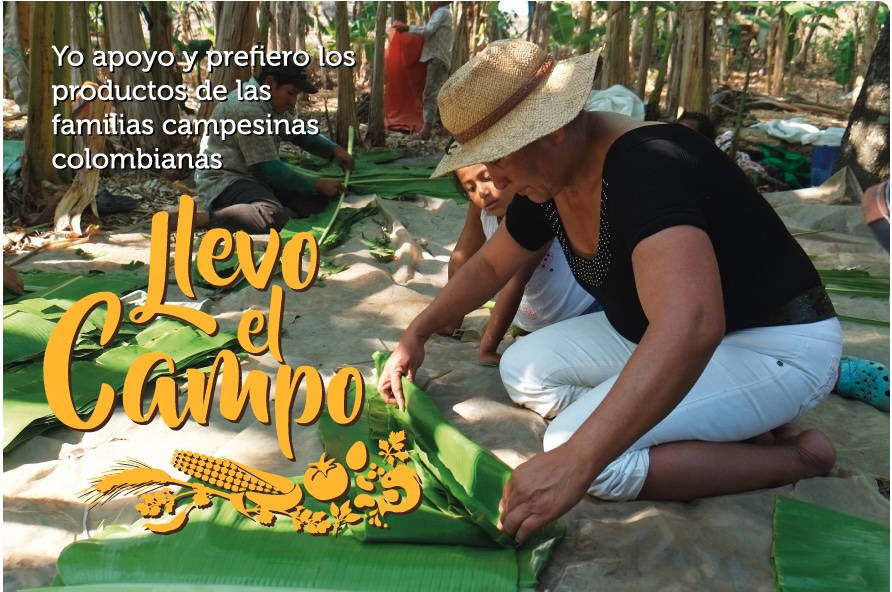
The I Carry the Colombian Countryside (Llevo el Campo Colombiano) and Colombia Free of GMOs (Colombia Libre de Transgénicos) campaigns have also shared public platforms to highlight the connections between family farming, seed sovereignty, and food systems.
Defending Seeds Means Defending the Future
The experiences of these communities show that responses to the climate crisis are already taking shape in their territories: in the seeds they preserve, the knowledge they pass on, and the networks that sustain food production.
The challenge is to ensure that these experiences have a meaningful place in public policy and receive the resources needed to endure over time. This means recognizing communities not merely as beneficiaries of programs but as key actors in generating knowledge and making decisions that affect their territories.
In Los Palmitos, Roberto Barbosa continues to watch the sky before planting. Climate uncertainty remains, but the seeds he safeguards preserve something essential: the memory of generations of peasant farmers and the possibilities they leave for those yet to come.