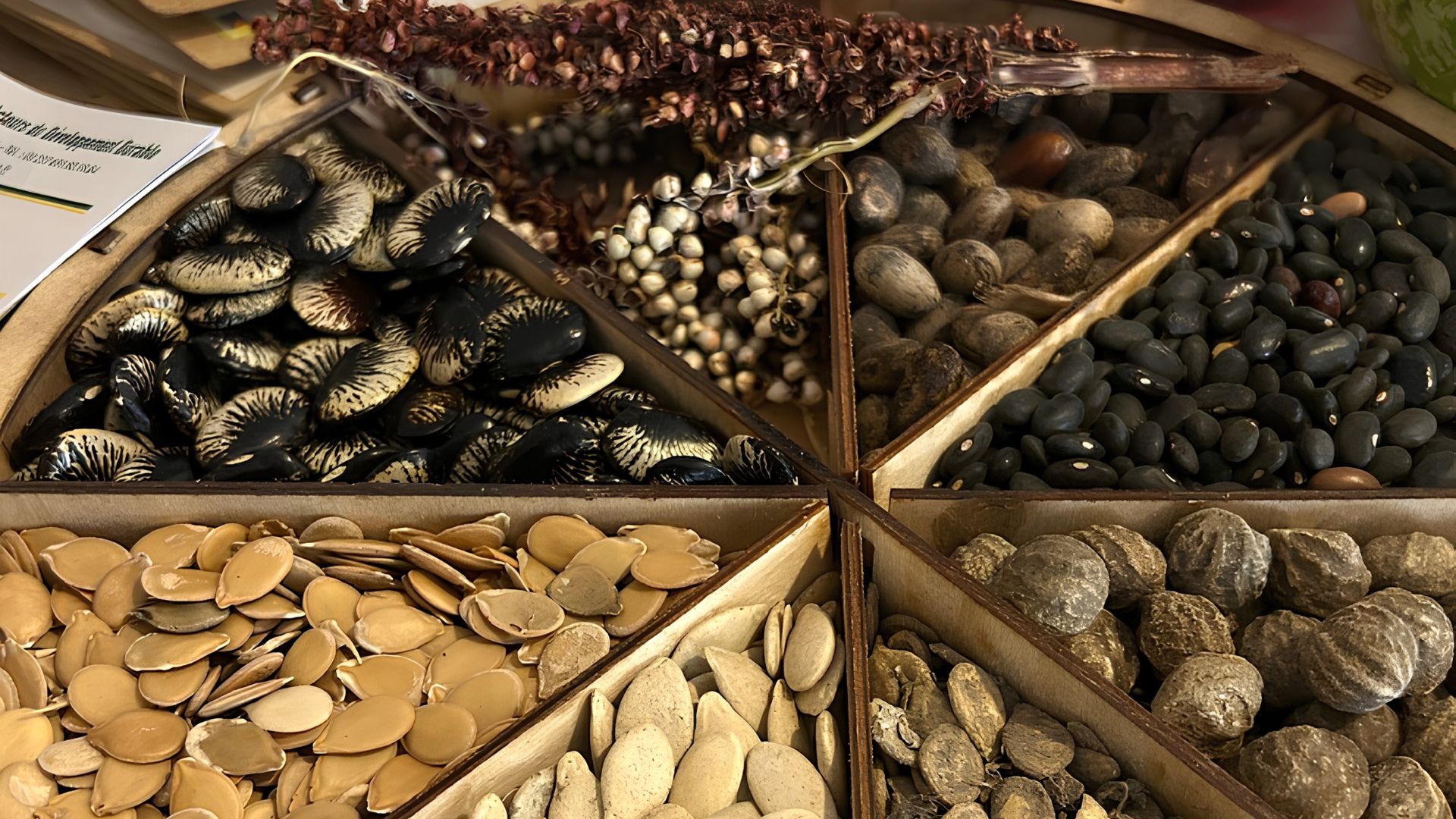
The Congo Basin, the planet’s second green lung, is home to communities whose knowledge and stewardship hold important answers to the climate, biodiversity, and food crises. The Agroecology Fund is supporting smallholder farmers and Indigenous communities on the frontline of protecting the Congo Basin, the “Lungs of the World”.
Million Belay, General Coordinator of the Alliance for Food Sovereignty in Africa (AFSA) – an Agroecology Fund grantee – explains: “The vast expanse of forest across the Congo Basin stores enormous quantities of carbon, influences rainfall across the world, sustains intricate webs of biodiversity and the lives, economies and cultures of over 75 million people.
Yet, Congo Basin is a place of extraction. 4 million people were taken from the Basin and nearly 20 million died from forced labour during 400 years of slavery. The suffering of colonialism is still embedded in this place. The region is under siege from logging, mining, agricultural expansion, charcoal production and infrastructure development. Millions of hectares of forest in the Congo Basin are facing rapid deforestation, climate change, and food insecurity.
COBCAI: Defining the future of the congo basin from the grassroots
To address these issues, AFSA, a network of networks that reaches 200 million farmers across Africa, launched the Congo Basin Biodiversity, Climate and Agroecology Initiative (COBCAI) project, an ambitious initiative aimed at biodiversity conservation, food sovereignty, and human rights.
From 25- 27 August 2026, AFSA brought together around 180 leaders from six Congo Basin countries, Republic of Congo, Democratic Republic of Congo (DRC), Gabon, Equatorial Guinea, Cameroon in Yaoundé. To build a powerful alliance of social movements ready to fulfill the objectives of the COBCAI. To be there before destruction becomes irreversible.
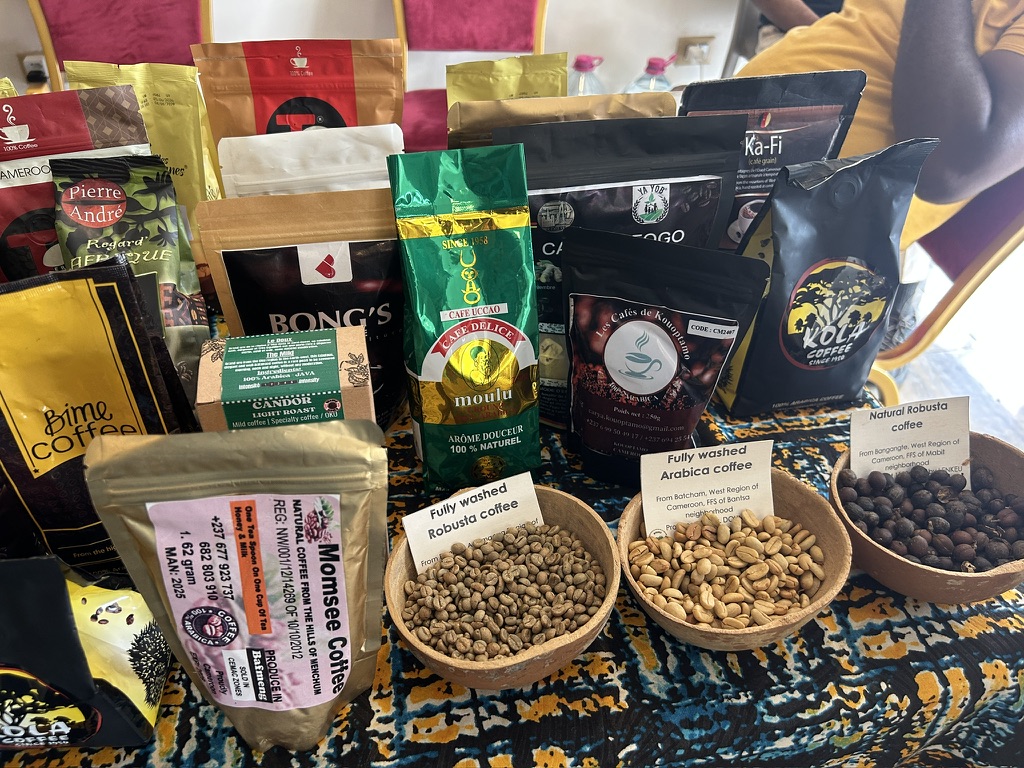
The convening put social movements of peasant farmers, indigenous peoples, women and community voices at the centre of the struggle for the region’s forests, land, and food. COBCAI amplifies the work of the people of this ancestral land- their knowledge of medicines, seeds, plants, and animals which understand the natural cycles of the forest and fields in order to protect them.
Goals of COBCAI
The goals of the COBCAI project are to promote the adoption of agroecology to speed up climate adaptation and regenerate biodiversity. It has a primary objective of stopping deforestation to retain forests as carbon storage at the global level.
There are work strands to promote indigenous peoples land rights and agrarian reform, knowledge sharing networks, reforestation, seed saving, and political advocacy by social movements.
There is a big focus on trying to influence governments to integrate agroecology strategies, which was apparent as the agricultural minister of Cameroon was present for the convergence and spoke strongly towards a national level agroecology strategy. An effort is likewise underway to create a national agroecology strategy in the DRC.
Coming together to leverage finance for agroecology
The movements, including ANASA, participating in the COBCAI initiative hope that by building this common platform they will be in a better position to access funding from country level, regional level and international finance for climate and biodiversity.
Joseph Aruna, of the Congo Basin Conservation Society – an Agroecology Fund grantee – is networking organisations together to develop collaborative funding applications on a regional level. He pointed out that “grassroots organisations struggle with accessing big funds due to language barriers and the complexity of applications. Through this process we have gained a common understanding of the project’s goals so we can move forward together, being stronger than we are alone.”
Another AEF grantee, Elizabeth Atanga Afanda, from Concertation Nationale des Organisations Paysannes au Cameroun (CNOP-CAM) runs an initiative to build stronger markets for agroecological products, processing, microcredit, shop, run alongside a campaign called “We eat Cameroonian”. They worked with 10 countries in Central Africa to access International Fund for Agricultural Development (IFAD) funding and plan to build upon this experience as COBCAI seeks large-scale multilateral finance.
AEF grantees are at the heart of solutions
Since 2023, the Agroecology Fund has been reinforcing its grant program to support grassroots-led initiatives in the Congo Region. The purpose is to strengthen local efforts to promote agroecology solutions towards resilient food systems that conserve biodiversity and improve livelihoods.
Cyriaque Evina and Etim Ndembe of the Réseau des Acteurs du Développement Durable (RADD) network go from village to village to work with women to create community seed banks: “We find seeds from our grandparents and keep them for the next generation of young people. The seeds of peasants are adaptive; hybrid seeds have not worked, so they go to the traditional seeds. Without local seeds, the future is compromised”.
Kevin Boucheke of Service d’Appui aux Initiatives Locales de Développement (SAILD) – AEF grantee- teaches agroecology to support the conservation of forests in south to east of Cameroon and promote peace in refugee camps. Much of this focus is on local processing units for agroecology products within a country level strategy for import substitution. Melanie Judicaël Edoa, a Women Artisan baker, supported by SAILD, Cameroon says “Previously, I only made and sold cookies made with local flour. Thanks to the training and support from SAILD, I’ve been able to diversify my product line by making bread with cassava flour.
They also have a training centre to promote entrepreneurial skills ” if a young person can make a business then they will adopt agroecology,” Nbdemet from Gabon Environment, fights against monoculture and corporations that promote deforestation by organising the community to practice agroecological poultry farming, tree nurseries and training schools. He notes that “young people need work and jobs! This is coming from the people of every country in Africa who hold so much creativity in making products from agroecological farms, which in turn supports preservation of nature.”
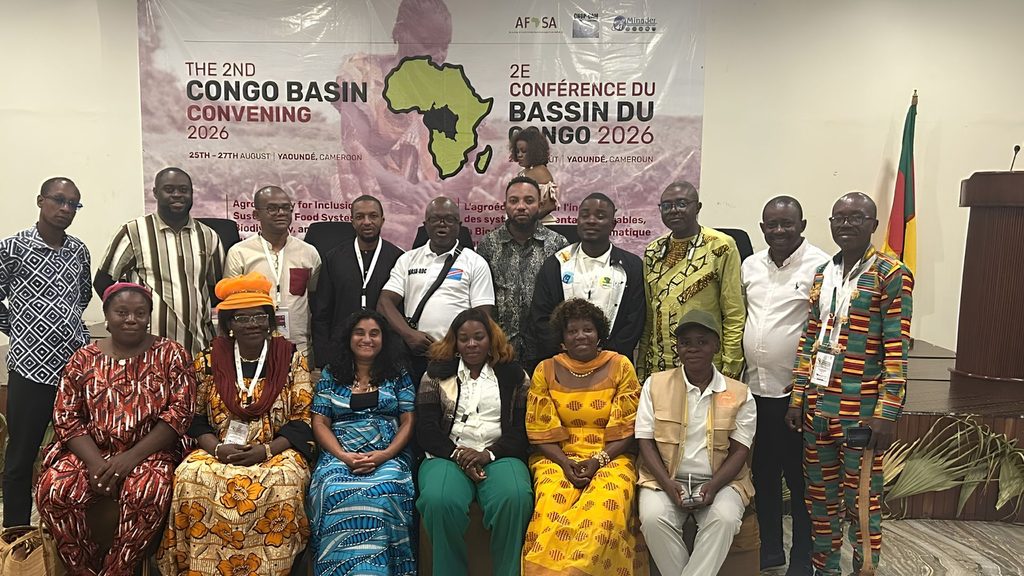
There were many more initiatives, skillfully managed by grantees in deeply complex situations, building peace, stability, food sovereignty and regeneration on behalf of the whole of humanity. I attended the convening to learn about grantees important work across the region, to facilitate connection between their grassroots work and international finance for climate and biodiversity action, so their work can go further. Anatole Rasamilala, who supports AEF initiatives across Congo Basin will continue facilitating cross- learning among our grantees to contribute to this powerful alliance.
Jyoti Fernandes, Agroecology Fund Advisor and Campaigns & Policy Coordinator, Landworkers’ Alliance